


India Q1 FY27 GDP Growth Hits 7.8%: 3 Scenarios for INR and Gold
India's Q1 FY27 GDP grew 7.8%, beating a 7.4% poll and RBI's 7.0% projection. See three conditional scenarios for INR, rates and gold.
Original

简体中文
繁體中文
English
Pусский
日本語
ภาษาไทย
Tiếng Việt
Bahasa Indonesia
Español
हिन्दी
Filippiiniläinen
Français
Deutsch
Português
Türkçe
한국어
العربية
اردو




Abstract:There is a lot of dishonesty in the Forex business, as there is in most things in the world that involve money. Some of it is harmful, while others are not. You've undoubtedly seen countless ads or advertising describing how fascinating the world of high finance is and how wealthy you can become by trading currencies at this point. However, the most of this will be nothing more than sales techniques.
There is a lot of dishonesty in the Forex business, as there is in most things in the world that involve money. Some of it is harmful, while others are not. You've undoubtedly seen countless ads or advertising describing how fascinating the world of high finance is and how wealthy you can become by trading currencies at this point. However, the most of this will be nothing more than sales techniques.
The fact is that most skilled traders are long-term even-keeled individuals. This isn't to suggest they won't have a meltdown or an outburst now and then, since when you're dealing with enormous sums of money, emotions are certain to come into play. I've been working on myself for years to try to be cool and not trade on a whim. You're in a position where a lot of the large institutions are trading algorithms, which means they're not making decisions based on emotion.

Winning and losing streaks may both be harmful.
Ironically, I've discovered that both winning and losing streaks may cause a lot of the same problems over time. If you experience seven or eight Boring Forex Tradinglosses in a row, for example, you may feel as if you can't do anything right in terms of trading, and you may begin to make unpredictable and emotional judgments. If you have five or six wins in a row, on the other hand, it's tempting to believe that you've finally “figured out the market,” and you begin to trade a little more. You get the feeling that you're seeing the market in ways that only you can, which is thrilling.
The truth is that this is one of the riskiest periods of the year since you may find yourself making deals that don't exactly line up precisely and ready to take a little more risk than normal.
If you've had a run of both victories and defeats, your reaction should be the same: sit on the bench and take a rest. Before attempting to re-enter the market, you must first regain control of your emotions. You should be able to relax as a result, allowing you to make far more smart selections.
Act as though you're competing against experts.
When it comes to trading, professionalism is the most crucial thing to remember. You should have a system in place that has shown to be trustworthy over time, and you should not work against it after you've established that it works. Unfortunately, far too many retail traders will succumb to the whims of the moment and make transactions that are unrelated to their methodology. This is tough to compete against since there are instances when you think you can anticipate what the market is about to do before it happens.
If it's not part of your regular trading signals, though, being wrong might entirely derail your performance. If that's the case, expect irregular results.
I can guarantee you that professional shops have risk managers and strict procedures for a reason. They understand human nature and know that the more thrilling trading becomes, the more probable something negative will occur. This might be as easy as handing back all of the day's gains, or it can be as complicated as converting a 1% loss into a 10% loss. In any case, it's discouraging to say the least.
Last but not least, maintain a sense of perspective.
Let's face it, we all enjoy trading, and I understand how you feel. Working in the forex markets is the only thing I'd rather do. I genuinely enjoy what I do, but one of the most common issues that traders have is that they place much too much attention on trading as a whole. While I am passionate about trading, I also have a long list of other priorities in my life.
Having the ability to walk away
It's critical, in my opinion, to be able to step away from a computer. Not only when the market is moving and you're having a horrible day, but also when you're working on a live deal. There's nothing further you can do if you've set up stop loss and possible take profit orders. Observing the graph will have no effect on what occurs next. Some of the finest transactions I've ever made have been when I stepped away only to return to find big profits or even a closed trade with my take profit order already in place.
Remember, we trade to generate money and improve our lives, not to trade to live. Simply keep in mind what you're dealing with and what the likely outcome will be. I understand how tough it is to maintain your composure, but it is critical. If you have a strategy or approach that earns money over time, all you have to do now is put it into action. If you do that, statistically, you should be able to make money. The rest of the crap is what gets us in trouble.

Disclaimer:
The views in this article only represent the author's personal views, and do not constitute investment advice on this platform. This platform does not guarantee the accuracy, completeness and timeliness of the information in the article, and will not be liable for any loss caused by the use of or reliance on the information in the article.
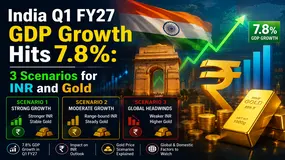
India's Q1 FY27 GDP grew 7.8%, beating a 7.4% poll and RBI's 7.0% projection. See three conditional scenarios for INR, rates and gold.

Did you encounter trade-related concerns with Tattvam, a Mauritius-based brokerage entity? Several users have reportedly accused the broker of cancelling profitable trades, allegedly citing scalping as the reason. At the same time, traders have reportedly expressed concerns over the lack of understanding among the broker officials about critical trading aspects such as copy trading. In this Tattvam review, we have carefully examined user-reported allegations. Additionally, we have given a regulatory overview of the broker.

Choosing a forex liquidity provider is not a search for the lowest displayed spread or the longest provider list. It is a broker decision about pricing integrity, depth, routing, credit, reporting, incident response, and client communication. This 2026 guide explains how a forex LP, FX liquidity provider, or liquidity provider forex arrangement fits into a broker’s execution chain; what to test before onboarding; why a “best forex liquidity provider” claim cannot replace due diligence; and how to compare cost beyond commission. Use the execution-quality scorecard, provider questions, routing scenarios, and 90-day onboarding plan to assess whether a liquidity relationship can support your actual client mix, instruments, risk model, and jurisdiction. The goal is not to make a universal ranking. It is to build evidence that your broker can explain, supervise, reconcile, and recover its execution service when market conditions are difficult.
The visible fee in an MT4 white label proposal is rarely the real cost of operating it. For an existing broker, the decision is not simply whether an MT4 white label platform is “cheap” or “expensive.” The real question is whether the commercial model remains viable after integration, support, data, client migration, compliance, and exit costs are included. That is why an MT4 white label cost review should be built as a 24- to 36-month operating case. It should compare three credible choices: 1. Keep the present MT4 setup and improve its weakest controls. 2. Replace the MT4 white label provider but retain the client proposition. 3. Migrate selected clients or products to another platform while running MT4 in parallel. This guide explains how to build that case without relying on headline prices or generic vendor claims.
WikiFXWikiFXWikiFXWikiFXWikiFXWikiFXWikiFXWikiFXWikiFXWikiFX