


IG Review for India 2026: RBI Alert List, Regulation, Login, and Forex Risk
IG review for India in 2026: see the RBI Alert List entry, overseas regulation, login checks, forex limits, and a clear broker safety checklist.
Original

简体中文
繁體中文
English
Pусский
日本語
ภาษาไทย
Tiếng Việt
Bahasa Indonesia
Español
हिन्दी
Filippiiniläinen
Français
Deutsch
Português
Türkçe
한국어
العربية
اردو




Abstract:Support and resistance levels assist traders to understand the market better. As we all know, anyone who has a better understanding of the market has a sharper edge compared to those who don’t
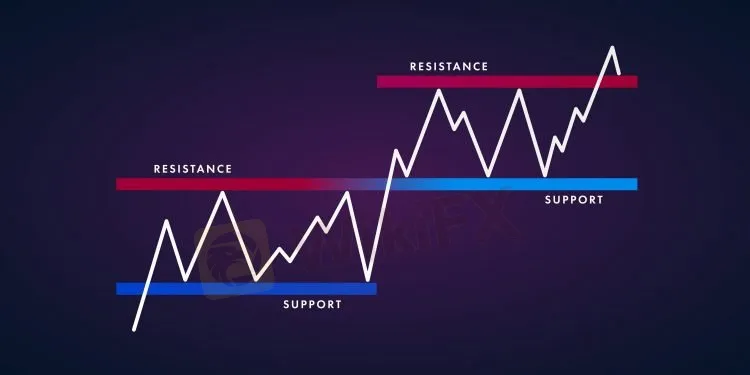
Indeed, knowledge is power in trading.
Basically, support levels indicate prices that a currency will not likely fall below. Conversely, resistance levels indicate prices that a currency will probably not exceed.
Support and resistance levels can be seen as the ‘oracle’ of market trends because these can predict whether a current trend will keep going or not more accurately. Accuracy is everything in trading. A fool-proof information enables traders to confidently enter or close a position, or place a stop or a limit.
Technical analysts use charts and other tools to study and analyze the market history and come up with a pattern that may aid them to make a prediction of future activities. But even with the capability to archive past activities and generate patterns from it, past performance is not a guarantee of future results.
This method looks into the supply and demand surrounding specific security and currency. It is more focused on what actually happens, instead of coming up with an explanation about why something happens.
One of the basic assumptions of technical analysis is that history has a tendency of repeating itself.
Currencies move in various directions. If it moves up, it will not stay there forever; we can possibly see it in downtrends or range. Trends can be long or short term, and certainly, it will not march on one direction indefinitely. There will be a frequent encounter of either support or resistance.
A currency has reached a support level if it undergoes a difficulty of falling below a specific price.
This happens most of the time because a currencys drop in value results in there being more buyers than sellers. With this, the floor is created because traders dive in and snap up purchases.
On the other hand, a currency has reached a resistance level if it undergoes a difficulty rising above a specific value. It usually happens when the number of sellers exceeds the number of buyers after a currency has experienced a significant increase in price.
Even with a better prediction that support and resistance levels provide, the information generated from them is not always confirmed.
To give you an example, if a currency exceeds past resistance, it can pull the interests of a lot of investors, and as a result, increases its prices.
On the reversal, other investors might possibly wait for the currency to decrease some value, mainly if it increased in price upon surpassing resistance. With this taking place, investors who hold back could be a fresh new source of support.
If a currency sinks below support, this situation could be a contributing factor to initiate a bigger sell-off. This situation can happen when a currency reacts to major news on political or economic development. So the old support could become the new resistance as the currency finds it hard to achieve its last price range.
It is still the classic psychology that plays a major role in an investor‘s decisions. These are not entirely because of the outside influences that we can see and hear. It’s more of the investors psychology. With this, the global market will frequently create levels of support and resistance largely driven by psychology.
There is no doubt that support and resistance levels are crucial. By carefully analyzing and identifying these levels, investors can pinpoint the ranges that currencies are trading in and make more accurate transactions.

Disclaimer:
The views in this article only represent the author's personal views, and do not constitute investment advice on this platform. This platform does not guarantee the accuracy, completeness and timeliness of the information in the article, and will not be liable for any loss caused by the use of or reliance on the information in the article.
IG review for India in 2026: see the RBI Alert List entry, overseas regulation, login checks, forex limits, and a clear broker safety checklist.

Orbex, a Cyprus-based brokerage entity, has recorded 30 exposure complaints on WikiFX, a leading forex broker regulation inquiry tool, so far. Other review websites have also recorded a healthy number of complaints against the brokerage firm. These complaints largely talk about the alleged profit confiscations by the broker in the name of trading violations, difficulty in accessing fund withdrawals, capital losses due to artificial slippage, etc. In this Orbex review, we have investigated user complaints and provided a regulatory overview of the broker.
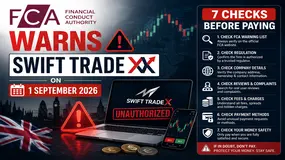
FCA warns Swift TradeX in a notice first published and updated on 1 September 2026. The UK Financial Conduct Authority says the firm may be providing or promoting financial services without permission, is not authorised, and may be targeting people in the UK. The notice names the website swifttradexai.com, a Worcester address and a UK telephone number, but also cautions that unauthorised businesses may use incorrect or borrowed contact details. The confirmed issue is authorisation status—not a court finding about every transaction. Anyone considering a payment should stop, verify the firm independently, and avoid using contact information supplied by the platform itself.
ThinkMarkets review for India: check the RBI Alert List, overseas entities, regulation, login security, forex rules, costs, withdrawals, and leverage risk.
WikiFXWikiFXWikiFXWikiFXWikiFXWikiFXWikiFXWikiFXWikiFXWikiFX