


FCA Warning Capital Zodiac 7 September 2026 and Seven Checks Before Paying
The FCA named Capital Zodiac as an unauthorised clone on 7 September 2026. Check capitalzodiac.com, capitalzodiac.net and FRN 806702 before paying.
Original

简体中文
繁體中文
English
Pусский
日本語
ภาษาไทย
Tiếng Việt
Bahasa Indonesia
Español
हिन्दी
Filippiiniläinen
Français
Deutsch
Português
Türkçe
한국어
العربية
اردو




Abstract:One of the biggest forex scams in history was the Ponzi scheme operated by Bernard Madoff, which was uncovered in 2008. While the scheme did not specifically involve forex trading, it is still worth mentioning as it is one of the largest financial frauds in history and had a significant impact on the financial markets.

Bernard Madoff's Ponzi scheme is considered one of the largest financial frauds in history. The scheme was first established in the early 1990s and lasted until 2008 when it was uncovered by the authorities. While the scheme did not specifically involve forex trading, it is still worth mentioning as it is one of the largest financial frauds in history and had a significant impact on the financial markets.
Madoff's Ponzi scheme involved him taking money from investors and promising to invest it in the stock market on their behalf. He claimed he used a strategy that could consistently deliver high returns, even in challenging market conditions. Madoff promised investors returns of up to 12% per year, which he claimed were generated by his stock trading activities.
However, Madoff did not actually invest the money as promised. Instead, he used the money from new investors to pay off returns to existing investors. This created the illusion that his investment strategy was successful and generated the promised returns. In reality, no real investments were being made, and the returns were simply being paid out of the funds deposited by new investors.
The scheme continued to grow over the years as more and more investors were attracted by the high returns that Madoff was offering. However, the scheme collapsed in 2008 when the financial crisis hit, and investors began withdrawing their money. When Madoff could not meet the redemption requests, the fraud was exposed.

Madoff's Ponzi scheme is estimated to have defrauded investors by approximately $65 billion. The fallout from the scheme was significant, causing a temporary decline in stock prices and shaking investor confidence.
Madoff was eventually arrested, convicted, and sentenced to 150 years for his role in the scheme. After Madoff's arrest, the government set up a compensation fund to help the victims recover some of their losses. The fund was initially set up with $4 billion, which was raised by liquidating Madoff's assets. The fund has since distributed over $14 billion to the victims, representing about 80% of their approved claims. However, to this day, many victims still suffer significant financial losses that cannot be recovered.
After the scheme was uncovered, the US Securities and Exchange Commission (SEC) was heavily criticized for failing to detect the fraud, despite receiving numerous warnings over the years. As a result, the SEC implemented several changes to improve its oversight of the financial industry, including increased training for its staff, more rigorous enforcement of regulations, and closer monitoring of high-risk firms and individuals.
In addition to regulatory changes, the Madoff scandal also increased public awareness of the risks of investment fraud and the importance of conducting due diligence before investing. Investors are now more cautious when investing their money and are more likely to seek out reputable financial advisors and investment managers.
Overall, the Madoff Ponzi scheme served as a wake-up call for the financial industry, highlighting the need for greater transparency, accountability, and oversight. While it was a painful lesson for the victims of the fraud, it helped to bring about significant changes that will hopefully prevent similar frauds from happening in the future.

Disclaimer:
The views in this article only represent the author's personal views, and do not constitute investment advice on this platform. This platform does not guarantee the accuracy, completeness and timeliness of the information in the article, and will not be liable for any loss caused by the use of or reliance on the information in the article.
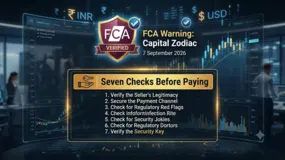
The FCA named Capital Zodiac as an unauthorised clone on 7 September 2026. Check capitalzodiac.com, capitalzodiac.net and FRN 806702 before paying.
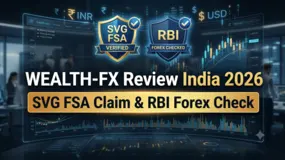
This WEALTH-FX review starts with a licensing statement that needs verification. The client agreement on wealth-fx.com says the company is incorporated in St. Vincent and the Grenadines as 88102 LLC 2021 and is authorised and regulated by the SVG FSA. An official SVG FSA notice, however, says forex trading brokerage activities are not licensed in that jurisdiction. The same agreement separately names WealthFX Liquidity Limited, company 180782, and describes a Mauritius International License. For an India-based reader, those website claims do not replace RBI rules for permitted forex transactions or an independently confirmed licence record.

Did ePlanet, a Comoros-based brokerage, allegedly withhold your dollars on the platform? Did the broker prevent you from accessing the ePlanet login dashboard upon a withdrawal request? Did the broker platform execute trade orders slowly? Have you faced losses due to slippage? This ePlanet review 2026 evaluates user claims while also providing a regulatory overview of the broker.

FCA warns EXOTICINVEST in a notice first published and updated on 3 September 2026. The UK regulator identifies EXOTICINVEST TRADING AND INVESTMENT FIRM and the website www.exoticinvest.ltd, stating that the firm is not authorised and may be targeting people in the UK. This is a dated regulatory warning, not a customer review or a confirmed loss report. Anyone approached through the named website should stop before paying, avoid sharing login credentials and verify the exact business independently through the FCA Firm Checker.
WikiFXWikiFXWikiFXWikiFXWikiFXWikiFXWikiFXWikiFXWikiFXWikiFX