


UK Retail Sales July 2026 Fall 0.5%: What the Result Means for GBP
UK retail sales fell 0.5% in July 2026, while the three-month measure rose 1.1%. See the ONS details and what the mixed result may mean for GBP.
Original

简体中文
繁體中文
English
Pусский
日本語
ภาษาไทย
Tiếng Việt
Bahasa Indonesia
Español
हिन्दी
Filippiiniläinen
Français
Deutsch
Português
Türkçe
한국어
العربية
اردو




Abstract:On Sunday, oil marketers warned that if the dollar kept fluctuating between N910 and N950 on the black market, the price of Premium Motor Spirit, also known as gasoline, would jump to between N680 and N720 per liter in the coming weeks.
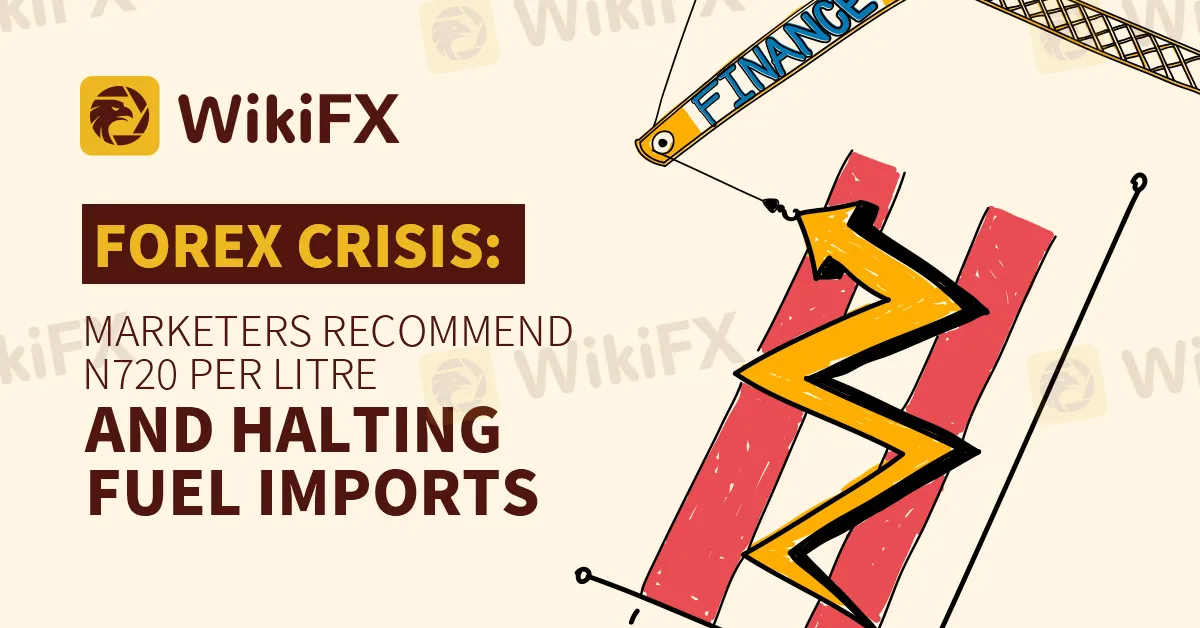
On Sunday, oil marketers warned that if the dollar kept fluctuating between N910 and N950 on the black market, the price of Premium Motor Spirit, also known as gasoline, would jump to between N680 and N720 per liter in the coming weeks.
Additionally, they made hints that the lack of foreign currency needed to purchase PMS was forcing dealers who wanted to do so to postpone their plans.
The naira was trading at over 945 to the dollar on Friday on the parallel market, less than a week after the local currency broke over the N900/dollar ceiling.
Oil traders claimed that the CBN Importers and Exporters official window for foreign exchange, which boasts of a lower exchange rate of approximately $740/litre, had remained illiquid and was unable to offer the $25 million to $30 million needed for dealers to import PMS.
They claimed that as a result, dealers who had been keen to import gasoline had temporarily ceased doing so.
Operators claimed that because to the depreciation of the naira, the single marketer, Emadeb, who had recently imported the item, was now having difficulty recouping its investment.
Senior oil industry representatives stated in separate interviews on Sunday that a price increase for PMS was impending unless the local currency strengthened in the ensuing weeks.
The Federal Government must step in to handle the situation, according to the leaders of the Major Oil Marketers Association of Nigeria, Independent Petroleum Marketers Association of Nigeria, and Petroleum Products Retail Outlets Owners Association of Nigeria.

According to Chief Chinedu Ukadike, the National Public Relations Officer for the Independent Petroleum Marketers Association of Nigeria, the price of gasoline is now determined by changes in foreign exchange, therefore Nigerians should prepare for a rise shortly.
“Once there is a slack in the naira against the dollar, there is going to be an effect,” he said in response to the question of whether oil marketers were considering raising the price of gasoline. A crucial element is the supply and demand for currency. We must also realize that other products except petroleum ones use foreign exchange.
Other manufacturers who import other goods are also looking for money. Consequently, the demand for dollars has grown. Since the dollar is currently trading between N910 and N940 and is getting close to N1,000, you can anticipate paying N750 per litre for PMS.
The price of petroleum products would undoubtedly rise once the value of the dollar increased because the products are dollar-driven, according to simple logic.
Ukadike claimed that oil marketers were still obtaining money from the black market since the CBN's official Importers and Exporters window lacked liquidity.
“Nigerians should prepare for a price regime of between N680 and N720 if the exchange rate stays around N910 to N950/$, but the price is going to hit N750 once the dollar rises to N1,000. ”This is because marketers still source dollars from the parallel market, and not only marketers but practically all importers in Nigeria. You should anticipate the price to change in line with the dollar because petroleum goods are no longer subject to subsidies, he said.
The IPMAN PRO also noted that, despite recent imports from Emadeb, the Nigerian National Petroleum Company Limited remained Nigeria's main source of gasoline.
For the time being, NNPC is still the main importer. Another company, Emadeb, recently imported goods; however, because this product is being sold in naira, recovering their cash is a different problem because PMS Imports is in dollars.
As an independent importer, it can be challenging to go back and make new purchases. That is the issue we are having, according to Ukadike.
In response to the question of when Nigerians will begin to notice the price hike, he stated, “NNPC is like the sole distributor of petroleum products right now, so once you see a change in the price of petrol at their outlets, then other marketers will implement it.”

MARKETERS WHO DO NOT IMPORT
Clement Isong, the Executive Secretary of the Major Oil Marketers Association of Nigeria, made reference to the fact that the dealers were not importing gasoline despite the government having just granted licenses to roughly six marketers to import goods.
Isong responded, “The I&E window is illiquid,” when asked about the import of PMS by other marketers and whether they were sourcing FX via the I&E window or the parallel market. There isn't any cash there.
You must spend $25 million to $30 million to purchase goods. It is not visible in the I&E window. As a result, people are not importing because it doesn't work.
We can't locate Dollar again, and you can't locate it at this time. To improve our daily crude oil output, Nigeria needs to resolve the security challenges in the Niger Delta. The market will have money if we raise it to 1.8 or two million barrels per day. Therefore, we must prevent oil theft.
FG NEEDS TO STEP IN.
Isong responded to concerns about a potential increase in gasoline prices by saying that if the dollar kept strengthening against the naira, this increase was unavoidable, but added that the government could have to step in.
Well, the President himself stated in his speech that they would interfere if they saw that gasoline prices were getting too high. Nobody wants prices to rise too much, so we don't want that to happen.
Accordingly, the MOMAN official said, “if the dollar keeps rising, we expect some sort of intervention from the government based on what the President said.”
He continued by saying that due to the recent deregulation of gasoline, PMS was priced differently than diesel.
The NNPC is the dealer with the majority of the stock. Consequently, it has an impact on market pricing. Diesel, on the other hand, is unique because it has long since been deregulated. Therefore, people's decisions to sell gasoline will be influenced by their cost structure, bank loans, foreign exchange rates, etc.

Disclaimer:
The views in this article only represent the author's personal views, and do not constitute investment advice on this platform. This platform does not guarantee the accuracy, completeness and timeliness of the information in the article, and will not be liable for any loss caused by the use of or reliance on the information in the article.
UK retail sales fell 0.5% in July 2026, while the three-month measure rose 1.1%. See the ONS details and what the mixed result may mean for GBP.

Pakistan forex reserves stood at $22.506 billion on 13 August 2026, while the SBP dashboard showed a USD/PKR mark to market rate of 277.5713 on 20 August. This article separates the SBP forex reserves facts from predictions about the Pakistan rupee and the forex market Pakistan.

A multi-asset liquidity solution can help a broker support FX, CFDs, commodities, and indices through a more unified operating model. But adding asset classes can also create fragmented symbols, pricing, routing, margin rules, records, and client messages if controls are not designed first. This 2026 guide explains how a multi asset liquidity provider, forex CFD liquidity setup, commodity liquidity provider, and indices liquidity provider fit into a broker-owned execution service. It outlines the due-diligence questions, shared-control model, cost drivers, and 90-day implementation plan that help teams expand without making the execution chain harder to explain. The aim is not to promise deeper liquidity or better trading outcomes. It is to create evidence that a broker can supervise market access, trace order events, reconcile costs, and communicate consistently to the relevant clients when conditions are difficult.

Gold surged above $4,500 after the US Treasury expanded its purchases of longer-dated government bonds, pushing yields and the dollar lower. But this was not debt forgiveness or Federal Reserve money printing—it was a liquidity operation that exposed a much bigger fear: America may be finding it increasingly difficult to live with market-driven interest rates.
WikiFXWikiFXWikiFXWikiFXWikiFXWikiFXWikiFXWikiFXWikiFXWikiFX