


India Q1 FY27 GDP Growth Hits 7.8%: 3 Scenarios for INR and Gold
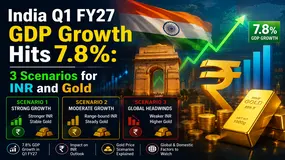
India's Q1 FY27 GDP grew 7.8%, beating a 7.4% poll and RBI's 7.0% projection. See three conditional scenarios for INR, rates and gold.
Original

简体中文
繁體中文
English
Pусский
日本語
ภาษาไทย
Tiếng Việt
Bahasa Indonesia
Español
हिन्दी
Filippiiniläinen
Français
Deutsch
Português
Türkçe
한국어
العربية
اردو




Abstract:The global forex market is influenced by a multitude of economic indicators, each offering a unique glimpse into the health and performance of economies worldwide. Among these, the Non-Farm Payrolls (NFP) report stands out as one of the most eagerly awaited and influential indicators.
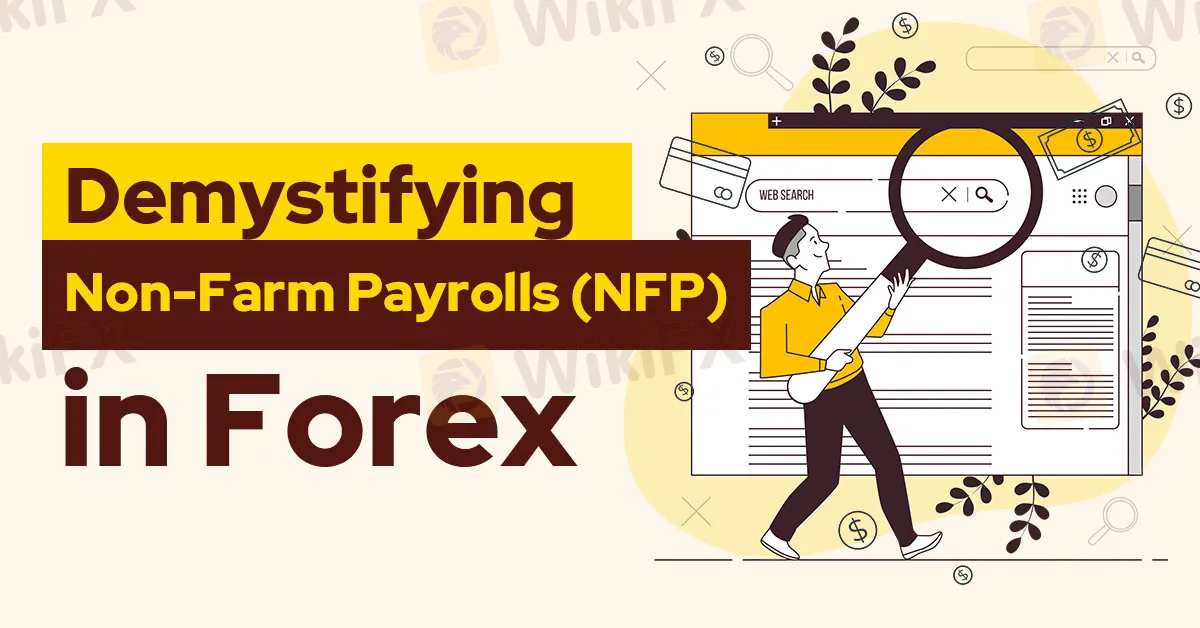
The global forex market is influenced by a multitude of economic indicators, each offering a unique glimpse into the health and performance of economies worldwide. Among these, the Non-Farm Payrolls (NFP) report stands out as one of the most eagerly awaited and influential indicators. Published monthly by the U.S. Bureau of Labor Statistics, the NFP report serves as a vital tool for assessing the condition of the U.S. job market. Its impact extends far beyond employment statistics, as the job market is intricately connected to overall economic growth. The NFP report's release sends ripples across the forex market, causing fluctuations in currency values and setting the tone for trading strategies.
At its core, the NFP report presents the total number of paid U.S. workers excluding farm employees, government employees, private household employees, and nonprofit organization employees. As the name implies, it excludes individuals employed in the agricultural sector, as this sector is known for its seasonal employment patterns that can skew the overall employment data. By focusing on non-farm payrolls, the report offers a more accurate representation of the underlying employment trends in the broader economy.
The significance of the NFP report lies in its role as a barometer of economic health. Employment serves as a linchpin for economic growth, as it directly impacts consumer spending power, which in turn fuels demand for goods and services. Strong employment figures often signal a growing economy, increased consumer confidence, and potential inflationary pressures. Conversely, weak employment figures can indicate economic stagnation or contraction.
For forex traders, understanding the NFP report is not just an academic exercise but a crucial component of informed decision-making. The report's release can trigger substantial market volatility, as traders react to the unexpected or anticipated changes in employment numbers. This volatility can lead to rapid fluctuations in currency values, creating both opportunities and risks for traders.
To aid traders in deciphering the complexities of the NFP report, platforms like WikiFX have emerged as valuable resources. These platforms offer educational materials that delve into the nuances of the report, historical data, and its past impacts on the forex market. By immersing themselves in such information, traders can gain a deeper understanding of the factors that drive market reactions and can better prepare themselves to navigate the potential storm of volatility that accompanies the release of the NFP report.
By analyzing historical trends and comparing them with the most recent data, traders can identify patterns and correlations between NFP outcomes and subsequent currency movements. Armed with this knowledge, they can develop more effective trading strategies that take advantage of the market's response to the report's release.
In conclusion, the Non-Farm Payrolls (NFP) report is a pivotal economic indicator that wields significant influence over the forex market. Its release provides insights into the health of the U.S. job market and, by extension, the broader economy. Traders who take the time to understand the intricacies of the NFP report can make more informed trading decisions, mitigate risks, and seize opportunities amid the market's often turbulent reactions. Platforms like WikiFX offer a valuable knowledge base for traders looking to harness the power of this essential economic indicator.

Disclaimer:
The views in this article only represent the author's personal views, and do not constitute investment advice on this platform. This platform does not guarantee the accuracy, completeness and timeliness of the information in the article, and will not be liable for any loss caused by the use of or reliance on the information in the article.
India's Q1 FY27 GDP grew 7.8%, beating a 7.4% poll and RBI's 7.0% projection. See three conditional scenarios for INR, rates and gold.
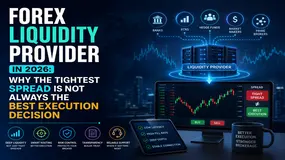
Choosing a forex liquidity provider is not a search for the lowest displayed spread or the longest provider list. It is a broker decision about pricing integrity, depth, routing, credit, reporting, incident response, and client communication. This 2026 guide explains how a forex LP, FX liquidity provider, or liquidity provider forex arrangement fits into a broker’s execution chain; what to test before onboarding; why a “best forex liquidity provider” claim cannot replace due diligence; and how to compare cost beyond commission. Use the execution-quality scorecard, provider questions, routing scenarios, and 90-day onboarding plan to assess whether a liquidity relationship can support your actual client mix, instruments, risk model, and jurisdiction. The goal is not to make a universal ranking. It is to build evidence that your broker can explain, supervise, reconcile, and recover its execution service when market conditions are difficult.
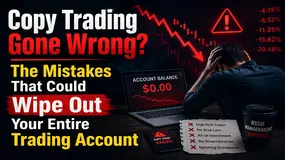
We all love trading geniuses and their strategies that earn them profits season after season. And we also love following them to make our investment journey seamless. Copy trading is one such tactic that beginners employ to enter the forex market. What do most of them usually do? They pick an experienced investor from the list and let the platform replicate every trade automatically. The fact that experienced traders continually earn profits, the feeling of copying their trades remains intense. However, the uncertain forex landscape can bite you hard by simply copying trades and not focusing on technical analysis and the charts during the day. Beginners can have a set of preconceived notions that can potentially open the gate for losses. In this article, we have highlighted such mistakes traders should avoid.

As the global forex market continues to move toward regulatory convergence and greater transparency, “trust,” a concept long and frequently emphasized, is gradually evolving from a subjective perception into a quantifiable and verifiable industry standard. WikiFX announces that its industry initiative, “Let Trust Be Seen,” has achieved phased results, attracting broad attention and participation worldwide.
WikiFXWikiFXWikiFXWikiFXWikiFXWikiFXWikiFXWikiFXWikiFXWikiFX