


FCA Warning Capital Zodiac 7 September 2026 and Seven Checks Before Paying
The FCA named Capital Zodiac as an unauthorised clone on 7 September 2026. Check capitalzodiac.com, capitalzodiac.net and FRN 806702 before paying.
Original

简体中文
繁體中文
English
Pусский
日本語
ภาษาไทย
Tiếng Việt
Bahasa Indonesia
Español
हिन्दी
Filippiiniläinen
Français
Deutsch
Português
Türkçe
한국어
العربية
اردو




Abstract:Explore the intricacies of dividend stocks, from high-yield options to tax implications. Dive deep into why they're a favored investment choice, offering a blend of income and growth.

 Contents
Dividend stocks have long been a popular investment option for many people. They provide an appealing mix of capital appreciation and consistent income. Understanding the subtleties of dividend stocks might be critical for anybody contemplating entering the stock market or altering their portfolio. So, let's get into it and address some of the most often-asked questions regarding them.
High-yield dividend companies pay out a greater dividend yield than other equities in the market. These are generally from well-established corporations with consistent earnings that enable them to pay out large dividends. Utilities and real estate investment trusts (REITs) are two examples. However, it is critical to do research and check that the high yield is not the consequence of a falling stock price.

Dividend Aristocrats are S&P 500 firms that have increased their dividends for at least 25 consecutive years. These firms are seen as more stable and dependable, demonstrating the capacity to create regular profits throughout economic fluctuations.
As previously stated, several Dividend Aristocrats have continuous dividend increases. Procter & Gamble, Johnson & Johnson, and Coca-Cola are among them. Companies that consistently boost their dividends may be an indication of excellent financial health.

The ex-dividend date is the deadline for receiving the next dividend payment. If you buy a stock on or after this date, you will not be eligible for the next dividend. If dividends are important to you, timing your investments is critical.
DRIPs enable investors to reinvest their dividends back into the company, generally without incurring any extra transaction costs. This may be an effective method for compounding interest and growing investment over time.

Dividends are categorized as qualified or unqualified. Non-qualified dividends are taxed at your regular income rate, but qualified dividends are taxed at your capital gains rate. To fully comprehend these ramifications, it is essential to contact a tax specialist.
Yes, several ETFs specialize in dividend stocks. Vanguard Dividend Appreciation ETF and iShares Select Dividend ETF are two examples. These may provide investors with exposure to a diverse collection of dividend-paying firms.
Dividend yields are appealing in a variety of foreign firms and marketplaces. Companies in developed European markets, for example, have a long history of paying out large dividends. Before investing, always examine the financial health of foreign corporations and comprehend the region's political and economic context.

Examine the company's payout ratio, which is the percentage of profits paid out in dividends. An extremely high payout ratio might be a red flag. Understanding a company's debt and cash flow may also provide insight into the sustainability of dividends.
Dividend stocks and bonds may both provide income. Dividend stocks, on the other hand, have the possibility for capital appreciation, whilst bonds refund the principal at maturity. Stocks are more volatile than bonds, but they often give larger long-term returns.
Understanding dividend stocks and their complexities will help you make educated investing decisions. They appeal to many people because they provide a mix of income and possibility for development. However, like with any investment, it is critical to do research and keep current.
Consider downloading the WikiFX App for additional financial insights and news: https://www.wikifx.com/en/download.html.

Disclaimer:
The views in this article only represent the author's personal views, and do not constitute investment advice on this platform. This platform does not guarantee the accuracy, completeness and timeliness of the information in the article, and will not be liable for any loss caused by the use of or reliance on the information in the article.

The FCA named Capital Zodiac as an unauthorised clone on 7 September 2026. Check capitalzodiac.com, capitalzodiac.net and FRN 806702 before paying.
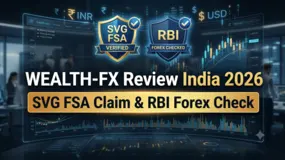
This WEALTH-FX review starts with a licensing statement that needs verification. The client agreement on wealth-fx.com says the company is incorporated in St. Vincent and the Grenadines as 88102 LLC 2021 and is authorised and regulated by the SVG FSA. An official SVG FSA notice, however, says forex trading brokerage activities are not licensed in that jurisdiction. The same agreement separately names WealthFX Liquidity Limited, company 180782, and describes a Mauritius International License. For an India-based reader, those website claims do not replace RBI rules for permitted forex transactions or an independently confirmed licence record.
Did ePlanet, a Comoros-based brokerage, allegedly withhold your dollars on the platform? Did the broker prevent you from accessing the ePlanet login dashboard upon a withdrawal request? Did the broker platform execute trade orders slowly? Have you faced losses due to slippage? This ePlanet review 2026 evaluates user claims while also providing a regulatory overview of the broker.

FCA warns EXOTICINVEST in a notice first published and updated on 3 September 2026. The UK regulator identifies EXOTICINVEST TRADING AND INVESTMENT FIRM and the website www.exoticinvest.ltd, stating that the firm is not authorised and may be targeting people in the UK. This is a dated regulatory warning, not a customer review or a confirmed loss report. Anyone approached through the named website should stop before paying, avoid sharing login credentials and verify the exact business independently through the FCA Firm Checker.
WikiFXWikiFXWikiFXWikiFXWikiFXWikiFXWikiFXWikiFXWikiFXWikiFX