


ThinkMarkets Review for India 2026: RBI Alert, Regulation, Login, and Forex Risk
ThinkMarkets review for India: check the RBI Alert List, overseas entities, regulation, login security, forex rules, costs, withdrawals, and leverage risk.
Original

简体中文
繁體中文
English
Pусский
日本語
ภาษาไทย
Tiếng Việt
Bahasa Indonesia
Español
हिन्दी
Filippiiniläinen
Français
Deutsch
Português
Türkçe
한국어
العربية
اردو




Abstract:The shift from traditional fiat currencies to cryptocurrencies in Nigeria is a multifaceted phenomenon driven by factors ranging from financial inclusion to economic uncertainties. While this trend presents new opportunities for individuals, it also raises challenges for regulatory bodies to adapt and establish frameworks that ensure consumer protection and financial stability.
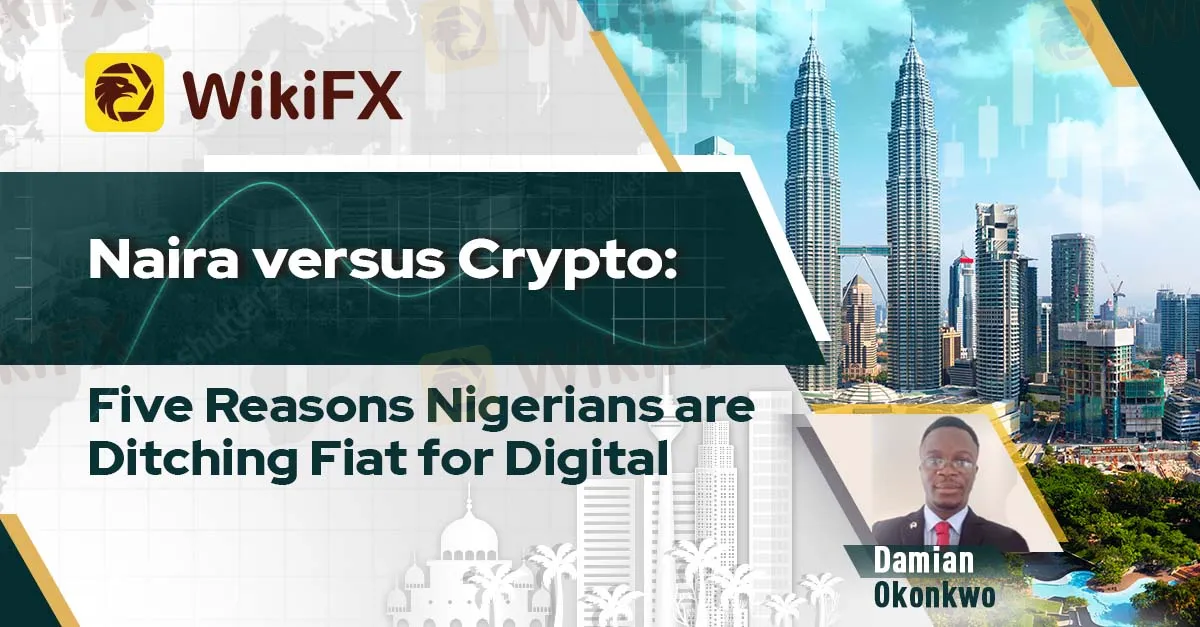
By: Damian Okonkwo

Introduction
In recent years, Nigeria has experienced a significant shift in its financial landscape as more and more individuals are turning away from traditional fiat currencies, such as the Naira, in favor of digital currencies, particularly Bitcoin and altcoins. This growing trend raises several questions about the factors influencing this shift and its potential implications for the Nigerian economy. In this article, we will explore five key reasons why Nigerians are increasingly embracing cryptocurrencies over traditional fiat currencies.
Five Key Reasons Why Nigerians are Increasingly turning to Cryptocurrencies over Traditional Fiat Currencies
Here are some of the major reasons why Nigerians are increasingly turning to Cryptocurrencies over traditional fiat currencies:
a) Financial Inclusion and Accessibility: One of the primary reasons driving the adoption of cryptocurrencies in Nigeria is the issue of financial inclusion. Despite being the largest economy in Africa, a significant portion of the population still lacks access to basic banking services. Cryptocurrencies, with their decentralized nature, provide an avenue for the unbanked and underbanked to participate in the financial system. The ease of access to cryptocurrencies through mobile devices has been a game-changer, allowing Nigerians to engage in financial transactions without the need for a traditional bank account.
b) Remittances and Cross-Border Transactions: Nigeria has a large diaspora, with many Nigerians living and working abroad. The traditional methods of sending money across borders are often costly and time-consuming. Cryptocurrencies offer a more efficient and cost-effective alternative for remittances. Blockchain technology enables faster and cheaper cross-border transactions, reducing the reliance on traditional remittance services and the associated fees. As a result, many Nigerians are turning to cryptocurrencies to send and receive money internationally.
c) Currency Depreciation and Economic Uncertainty: The Naira has faced a history of volatility and depreciation, leading to concerns about its stability as a store of value. Cryptocurrencies, particularly Bitcoin, are often viewed as a hedge against economic uncertainty and currency devaluation. Nigerians, seeking a more stable and resilient form of wealth preservation, are increasingly turning to cryptocurrencies as a means of protecting their assets from the inflationary pressures often associated with fiat currencies.
d) Youthful Population and Tech-Savvy Culture: Nigeria has a youthful population, with a significant percentage of the demographic being tech-savvy. The younger generation, comfortable with digital technology, is more inclined to explore and adopt new financial instruments, including cryptocurrencies. The rise of cryptocurrency exchanges and wallets that are user-friendly and accessible via mobile apps has played a crucial role in attracting this demographic to the world of digital currencies.
e) Entrepreneurial Opportunities and Investment Potential: Cryptocurrencies offer Nigerians new avenues for investment and entrepreneurial activities. The decentralized nature of many cryptocurrencies allows individuals to participate in projects and investments that may not be feasible within the traditional financial system. The allure of potential high returns and the democratization of investment opportunities are enticing many Nigerians to diversify their portfolios by including digital assets.
The Future of Cryptocurrencies in Nigeria
The future of cryptocurrencies in Nigeria appears dynamic and full of potential. As the government, regulators, and industry participants navigate the evolving landscape, finding a regulatory framework that encourages innovation while mitigating risks will be essential. If successful, Nigeria could position itself as a regional hub for cryptocurrency adoption, fostering economic growth and financial inclusion.
Conclusion
The shift from traditional fiat currencies to cryptocurrencies in Nigeria is a multifaceted phenomenon driven by factors ranging from financial inclusion to economic uncertainties. While this trend presents new opportunities for individuals, it also raises challenges for regulatory bodies to adapt and establish frameworks that ensure consumer protection and financial stability. As the crypto landscape in Nigeria continues to evolve, it will be crucial to monitor how the government, financial institutions, and the public respond to this paradigm shift in the country's financial ecosystem.

Disclaimer:
The views in this article only represent the author's personal views, and do not constitute investment advice on this platform. This platform does not guarantee the accuracy, completeness and timeliness of the information in the article, and will not be liable for any loss caused by the use of or reliance on the information in the article.
ThinkMarkets review for India: check the RBI Alert List, overseas entities, regulation, login security, forex rules, costs, withdrawals, and leverage risk.

Did mirrox, a brokerage firm, ask you to keep your margin level above 250%-300% and make you add funds immediately if it dropped below it? Did the broker prevent you from opening a trade despite having a healthy equity balance? Did it close your trading account upon a withdrawal request? Many traders have raised these concerns online while sharing their respective mirrox reviews. This article aims to examine these user allegations while answering the popular question: Is mirrox legit or a scam?
People searching NXG MARKETS regulation or regulation NXG MARKETS need to separate an overseas licence from permission in India. The Reserve Bank of India Alert List, updated 19 November 2025, names NXG Markets and nxgmarkets.com. RBI says listed entities are neither authorised to deal in forex under FEMA nor authorised to run an approved forex electronic trading platform. The broker's own site also says it does not serve residents or citizens of India. This NXG MARKETS review found an overseas Mwali licence record, but no RBI authorisation. No cited court ruling proves fraud. For an Indian user, the local warning and service restriction should control the decision.
Neomarkets, a Kazakhstan-based brokerage firm, is facing some allegations of fund scams and unfair charges. These charges were reportedly on both deposits and withdrawals. As negative Neomarkets reviews became prominent on broker evaluation platforms, it was important to inspect these allegations and understand its regulatory scope. We have covered these in this article.
WikiFXWikiFXWikiFXWikiFXWikiFXWikiFXWikiFXWikiFXWikiFXWikiFX