


IG Review for India 2026: RBI Alert List, Regulation, Login, and Forex Risk
IG review for India in 2026: see the RBI Alert List entry, overseas regulation, login checks, forex limits, and a clear broker safety checklist.
Original

简体中文
繁體中文
English
Pусский
日本語
ภาษาไทย
Tiếng Việt
Bahasa Indonesia
Español
हिन्दी
Filippiiniläinen
Français
Deutsch
Português
Türkçe
한국어
العربية
اردو




Abstract:The SEC delays Fidelity's Ethereum ETF decision to March. Growing interest in crypto ETFs and Fidelity's strategy were analyzed.

The U.S. Securities and Exchange Commission (SEC) has opted to delay its verdict on Fidelity's proposal for a spot Ethereum exchange-traded fund (ETF). This announcement comes after a recent filing by the SEC, revealing that the new deadline for their decision is March 5.
 Contents
The extension of the decision deadline allows the SEC additional time to carefully assess Fidelity's proposal and the wider implications of approving a spot Ethereum ETF. Fidelity initially submitted its proposal for the Fidelity Ethereum Fund back in November. In doing so, they referred to a previous legal ruling that questioned the SEC's reasoning behind rejecting spot crypto ETFs while permitting futures-based products.

This delay in the SEC's decision follows their recent authorization of 11 spot bitcoin ETFs. This move has stirred discussions within the financial industry about the possibility of a spot Ethereum ETF being the next milestone. It's worth noting that Fidelity is not alone in its pursuit of a spot in Ethereum ETF; it has joined forces with industry giant BlackRock in this endeavor, with both companies filing their applications late last year. These applications coincided with the launch of ether futures ETFs.
The SEC's decision to greenlight futures-based ETFs has raised speculation about their stance on Ethereum. It suggests that the regulator might be leaning towards treating Ethereum similarly to Bitcoin, implying that it may not be classified as a security.
Fidelity's filing emphasizes the importance of protecting investors, particularly in a landscape where U.S. investors are adopting higher-risk strategies to gain exposure to cryptocurrencies. In their filing, Fidelity highlights that “U.S. retail investors have lacked a U.S. regulated, U.S. exchange-traded vehicle to gain exposure to ETH.”

Referencing a recent legal decision involving Grayscale, Fidelity's filing points out inconsistencies in the SEC's stance, noting the agency's approval of futures-based crypto ETFs while rejecting spot-based ones. As a prominent asset management firm with $4.5 trillion under its management, Fidelity advocates for a regulated product that could mitigate the risks associated with unregulated crypto entities, as evidenced by issues with companies like FTX, Celsius Network, and BlockFi.
The filing goes on to state that “approval of a Spot ETH ETP would represent a major win for the protection of U.S. investors in the crypto asset space.” It suggests that if a Spot Ethereum ETP were available, a significant portion of the substantial investments tied up in these proceedings would remain securely in the brokerage accounts of U.S. investors.

Fidelity's move closely follows BlackRock's entry into the spot Ethereum ETF arena, indicating a growing interest among major asset managers in offering crypto-based investment products. The filing reveals Fidelity's intention to list the Fidelity Ethereum Fund on the Cboe BZX Exchange, providing investors with a regulated avenue for investing in Ether.
The quest for a spot Ethereum ETF in the United States is gathering momentum, with Fidelity becoming the seventh firm to seek SEC approval, joining the ranks of others like VanEck, 21Shares, ARK Invest, Hashdex, Grayscale, and Invesco Galaxy. This development showcases the increasing interest and competition in providing crypto-based investment opportunities to investors.

Disclaimer:
The views in this article only represent the author's personal views, and do not constitute investment advice on this platform. This platform does not guarantee the accuracy, completeness and timeliness of the information in the article, and will not be liable for any loss caused by the use of or reliance on the information in the article.

IG review for India in 2026: see the RBI Alert List entry, overseas regulation, login checks, forex limits, and a clear broker safety checklist.

Orbex, a Cyprus-based brokerage entity, has recorded 30 exposure complaints on WikiFX, a leading forex broker regulation inquiry tool, so far. Other review websites have also recorded a healthy number of complaints against the brokerage firm. These complaints largely talk about the alleged profit confiscations by the broker in the name of trading violations, difficulty in accessing fund withdrawals, capital losses due to artificial slippage, etc. In this Orbex review, we have investigated user complaints and provided a regulatory overview of the broker.
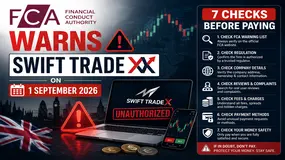
FCA warns Swift TradeX in a notice first published and updated on 1 September 2026. The UK Financial Conduct Authority says the firm may be providing or promoting financial services without permission, is not authorised, and may be targeting people in the UK. The notice names the website swifttradexai.com, a Worcester address and a UK telephone number, but also cautions that unauthorised businesses may use incorrect or borrowed contact details. The confirmed issue is authorisation status—not a court finding about every transaction. Anyone considering a payment should stop, verify the firm independently, and avoid using contact information supplied by the platform itself.

ThinkMarkets review for India: check the RBI Alert List, overseas entities, regulation, login security, forex rules, costs, withdrawals, and leverage risk.
WikiFXWikiFXWikiFXWikiFXWikiFXWikiFXWikiFXWikiFXWikiFXWikiFX