


IG Review for India 2026: RBI Alert List, Regulation, Login, and Forex Risk
IG review for India in 2026: see the RBI Alert List entry, overseas regulation, login checks, forex limits, and a clear broker safety checklist.
Original

简体中文
繁體中文
English
Pусский
日本語
ภาษาไทย
Tiếng Việt
Bahasa Indonesia
Español
हिन्दी
Filippiiniläinen
Français
Deutsch
Português
Türkçe
한국어
العربية
اردو




Abstract:Four Australian banks will refund $28M to low-income customers, including First Nations individuals, after ASIC found many were kept in high-fee accounts.
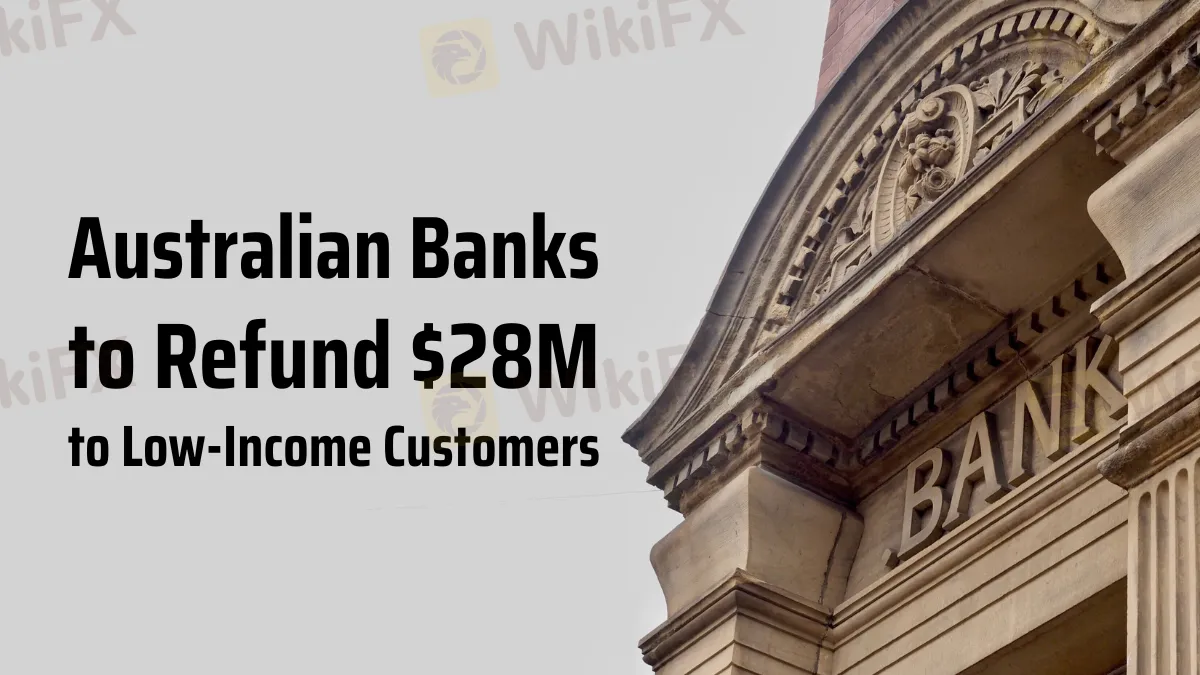
Four central Australian banks, ANZ Bank, Bendigo and Adelaide Bank, Commonwealth Bank, and Westpac, have agreed to repay a total of $28 million to low-income clients, including First Nations people. This ruling follows an investigation by the Australian Securities and Investments Commission (ASIC), which discovered that these clients were held in high-fee bank accounts despite being eligible for lower-cost options.
The ASIC audit, issued today, revealed that more than two million consumers, many of whom receive Centrelink benefits, were paying excessive costs. Customers who receive particular government payments should be eligible for low-fee accounts, according to the banking code of practice. However, the analysis revealed that many of these low-income clients were stuck in high-fee accounts, drastically diminishing their savings.
According to Alan Kirkland, an ASIC commissioner, these hefty fees put a financial hardship on many consumers, particularly those in rural and isolated locations. These clients often struggled to manage their funds due to the banks' cumbersome procedures.
“Banks knew that many of these customers on low incomes were in inappropriate high-fee accounts,” claims Kirkland. He pointed out that prior to the study, banks only provided cumbersome “opt-in” procedures for clients to convert to low-fee choices, forcing some to drive long distances to the closest branch.
While banks had processes in place to identify consumers who were likely to be eligible for reduced-fee accounts, their attempts to convince these customers to transfer may have been more successful, with success rates as low as 0.5%.
In response to ASIC's findings, the banks have pledged to convert more than 200,000 clients to low-fee accounts, which are estimated to save them around $10.7 million annually. Over the next 12 to 18 months, banks will refund more than $28 million in fees, with $24.6 million going directly to those receiving ABSTUDY payments—a support scheme for Aboriginal or Torres Strait Islander students or apprentices—and those living in areas with significant First Nations populations.
Kirkland stressed the need of banks to do more to avoid such concerns from occurring in the future. “Banks need to ensure they have systems and processes in place, so customers on low incomes can easily transition to low-fee accounts, regardless of their location,” he told us.

Disclaimer:
The views in this article only represent the author's personal views, and do not constitute investment advice on this platform. This platform does not guarantee the accuracy, completeness and timeliness of the information in the article, and will not be liable for any loss caused by the use of or reliance on the information in the article.
IG review for India in 2026: see the RBI Alert List entry, overseas regulation, login checks, forex limits, and a clear broker safety checklist.
FCA warns Swift TradeX in a notice first published and updated on 1 September 2026. The UK Financial Conduct Authority says the firm may be providing or promoting financial services without permission, is not authorised, and may be targeting people in the UK. The notice names the website swifttradexai.com, a Worcester address and a UK telephone number, but also cautions that unauthorised businesses may use incorrect or borrowed contact details. The confirmed issue is authorisation status—not a court finding about every transaction. Anyone considering a payment should stop, verify the firm independently, and avoid using contact information supplied by the platform itself.
ThinkMarkets review for India: check the RBI Alert List, overseas entities, regulation, login security, forex rules, costs, withdrawals, and leverage risk.
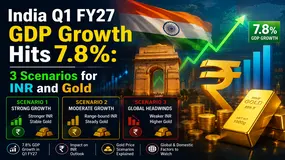
India's Q1 FY27 GDP grew 7.8%, beating a 7.4% poll and RBI's 7.0% projection. See three conditional scenarios for INR, rates and gold.
WikiFXWikiFXWikiFXWikiFXWikiFXWikiFXWikiFXWikiFXWikiFXWikiFX