


IG Review for India 2026: RBI Alert List, Regulation, Login, and Forex Risk
IG review for India in 2026: see the RBI Alert List entry, overseas regulation, login checks, forex limits, and a clear broker safety checklist.
Original

简体中文
繁體中文
English
Pусский
日本語
ภาษาไทย
Tiếng Việt
Bahasa Indonesia
Español
हिन्दी
Filippiiniläinen
Français
Deutsch
Português
Türkçe
한국어
العربية
اردو




Abstract:Swiss FINMA releases new guidance on stablecoins, highlighting risks of money laundering, default guarantees, and regulatory requirements for issuers.

The Swiss Financial Market Supervisory Authority (FINMA) has published new criteria for the issue and administration of stablecoins. This new order is part of FINMA's continuous efforts to address the changing risks connected with digital currencies while also ensuring that financial operations meet regulatory requirements.
Stablecoins, which are digital currencies meant to reduce price volatility by being tethered to actual assets such as national currencies, have grown in favor of a form of payment in the blockchain ecosystem. Despite their rising popularity, the Swiss regulator has clarified that creating stablecoins in Switzerland does not always need a FINMA license. This is primarily because many stablecoin issuers employ bank default guarantees, which may eliminate the requirement for a license under existing banking regulations.
FINMA's new guideline emphasizes that, although bank guarantees may be useful, they also present significant risks. Both stablecoin holders and institutions that provide these assurances face possible hazards, including financial stability and operational integrity. To address these issues, FINMA established minimum conditions for default assurances. These restrictions are intended to safeguard depositors and guarantee that financial institutions follow strict guidelines when engaging with stablecoin initiatives.

The advisory also emphasizes the regulator's concern about the dangers of money laundering, terrorist funding, and sanctions evasion. The anonymity and cross-border nature of stablecoin transactions heighten these dangers. Furthermore, such operations pose reputational hazards to the Swiss banking industry, potentially affecting its worldwide status.
FINMA's supervisory notice 06/2024 gives detailed information on how stablecoins are regulated under financial market legislation. It covers various important topics, including the legal categorization of stablecoins and their consequences for financial institutions. According to the guidelines, claims made by stablecoin holders are typically classified as deposits under banking law or collective investment schemes, depending on the stablecoin's form and purpose.
The regulator has also said that stablecoin initiatives are mainly intended to provide a reliable payment medium with minimal price fluctuation. This stability is accomplished by tying the value of the stablecoin to one or more underlying assets, which may be conventional currencies or other valuable assets.
In essence, FINMA's recent guideline on stablecoins is an important step toward ensuring that the developing area of digital currencies receives enough regulatory monitoring. By clarifying rules and emphasizing possible hazards, FINMA hopes to establish a safe and transparent financial system while limiting the risks connected with stablecoin transactions and guarantees.
Get the Latest on FINMA's Stablecoin Regulations! Find out how Switzerland is adapting its rules for stablecoin issuance and the associated risks. Read more on our news.html" target="_self" style="color: rgb(46, 82, 153);">news page.

Disclaimer:
The views in this article only represent the author's personal views, and do not constitute investment advice on this platform. This platform does not guarantee the accuracy, completeness and timeliness of the information in the article, and will not be liable for any loss caused by the use of or reliance on the information in the article.

IG review for India in 2026: see the RBI Alert List entry, overseas regulation, login checks, forex limits, and a clear broker safety checklist.

FCA warns Swift TradeX in a notice first published and updated on 1 September 2026. The UK Financial Conduct Authority says the firm may be providing or promoting financial services without permission, is not authorised, and may be targeting people in the UK. The notice names the website swifttradexai.com, a Worcester address and a UK telephone number, but also cautions that unauthorised businesses may use incorrect or borrowed contact details. The confirmed issue is authorisation status—not a court finding about every transaction. Anyone considering a payment should stop, verify the firm independently, and avoid using contact information supplied by the platform itself.
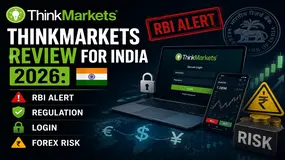
ThinkMarkets review for India: check the RBI Alert List, overseas entities, regulation, login security, forex rules, costs, withdrawals, and leverage risk.

Did mirrox, a brokerage firm, ask you to keep your margin level above 250%-300% and make you add funds immediately if it dropped below it? Did the broker prevent you from opening a trade despite having a healthy equity balance? Did it close your trading account upon a withdrawal request? Many traders have raised these concerns online while sharing their respective mirrox reviews. This article aims to examine these user allegations while answering the popular question: Is mirrox legit or a scam?
WikiFXWikiFXWikiFXWikiFXWikiFXWikiFXWikiFXWikiFXWikiFXWikiFX