


IG Review for India 2026: RBI Alert List, Regulation, Login, and Forex Risk
IG review for India in 2026: see the RBI Alert List entry, overseas regulation, login checks, forex limits, and a clear broker safety checklist.
Original

简体中文
繁體中文
English
Pусский
日本語
ภาษาไทย
Tiếng Việt
Bahasa Indonesia
Español
हिन्दी
Filippiiniläinen
Français
Deutsch
Português
Türkçe
한국어
العربية
اردو




Abstract:Discover the factors behind sudden prop trading firm shutdowns, from risk management failures to regulatory challenges, liquidity issues, and market conditions.
Prop trading firms are renowned for their high-stakes involvement in the financial markets. These firms use their own capital to trade financial assets, aiming for substantial profits. However, the risks involved can be just as significant as the rewards. Sudden shutdowns of prop trading firms often catch people off guard, but many underlying factors contribute to these abrupt closures. Understanding these factors makes it more evident why even seemingly successful prop trading firms might be forced to close down unexpectedly.
 Contents
One of the most critical factors leading to the shutdown of a prop trading firm is inadequate risk management. Risk management is the cornerstone of any prop trading firm, as these firms typically use high-risk strategies to maximize profits. However, a prop trading firm must have strong risk controls to avoid catastrophic losses. These losses often occur due to large, unexpected market movements that deplete a firms capital reserves at an alarming rate. When such financial distress spirals out of control, a prop trading firm might be left with no choice but to shut down.
Effective risk management demands foresight, discipline, and a comprehensive understanding of market dynamics for a prop trading firm.
Unfortunately, in the pursuit of greater profits, some prop trading firms might cut corners in their risk management processes. These firms often underestimate market volatility, which can quickly turn their positions against them. Prop trading firms that rely heavily on leverage are particularly vulnerable; if the market moves unfavorably, the resulting losses can escalate rapidly, leading to an unsustainable financial situation.
Another significant cause of sudden shutdowns in prop trading firms is the challenge of adhering to regulatory requirements. Prop trading firms operate in a highly regulated environment, and failing to comply with legal standards can be detrimental. Regulatory bodies continuously update rules to maintain market stability and protect investors, and prop trading firms must stay ahead of these changes. New regulations can impose unexpected financial and operational burdens, and those firms that are unprepared to adapt may find themselves forced to close.
For example, increased capital requirements or stricter compliance standards can place a strain on a prop trading firm's resources, making it difficult for them to sustain operations. In some cases, regulatory scrutiny can uncover unethical practices within a prop trading firm, leading to legal action, fines, or even forced closures. In an industry where compliance is critical, even minor regulatory missteps can result in the downfall of a prop trading firm.
Liquidity is crucial for the survival of a prop trading firm. These firms must maintain enough liquid assets to cover their trading positions and meet financial obligations. However, liquidity problems can arise from poor financial planning, unfavorable market conditions, or a sudden loss of investor confidence. When a prop trading firm experiences liquidity issues, it may struggle to meet its obligations, leading to a rapid decline and potential shutdown.
A liquidity crisis can occur when a prop trading firm is overextended and unable to sell assets quickly enough to cover its liabilities. In such situations, the firm might be forced to liquidate its positions at a loss, further deepening its financial troubles. If a prop trading firm cannot secure emergency funding or restructure its operations, it could face a sudden shutdown. This scenario is particularly likely for firms that operate with high leverage, where even a minor liquidity problem can escalate into a full-blown crisis.
Operational failures are another major cause of sudden shutdowns in prop trading firms. The fast-paced nature of prop trading relies heavily on advanced technology and infrastructure, from trading algorithms to data analytics platforms. When a technical glitch or cybersecurity breach occurs, it can paralyze a prop trading firms operations, leading to significant financial losses and, in some cases, a complete shutdown.

For example, if a prop trading firm experiences a failure in its trading infrastructure, it could lead to delayed or incorrect trades, resulting in substantial losses. Similarly, a cybersecurity breach that compromises sensitive data or disrupts trading algorithms can severely impact the firm's ability to function. Internal mismanagement, such as poor decision-making or a lack of oversight, can also contribute to operational failures. When these failures occur, they can create chaos within the firm, making it difficult to recover and continue operating, often resulting in a shutdown.
Market conditions play a critical role in the stability of prop trading firms. While these firms are adept at navigating volatile markets, extreme conditions can pose a significant threat. Prolonged downturns, sudden market shocks, or extreme volatility can all place immense pressure on a prop trading firms financial stability. Highly leveraged firms or holding concentrated positions are particularly at risk in such environments.
When market conditions become unfavorable, prop trading firms may face significant losses that they are unable to recover from. In severe cases, these losses can wipe out a firms capital reserves, forcing the firm to shut down. Even well-established prop trading firms are not immune to the effects of extreme market conditions. For instance, during the global financial crisis of 2008, several major financial institutions collapsed due to their inability to withstand market turmoil, and prop trading firms were no exception.
The trading industry is highly competitive, and prop trading firms that need to catch up with technological advancements or lose their competitive edge may find themselves outpaced by rivals. Competition for top talent, capital, and market share is intense, and firms that cannot compete effectively may need help to survive, ultimately leading to financial difficulties and closure.
Prop trading firms that need to catch up in innovation or attract sufficient capital may find themselves unable to compete with more prominent, more established players. The pressure to stay ahead of the curve can be overwhelming, and firms that are unable to adapt to changing market dynamics may be forced to shut down. In a rapidly evolving industry, even a slight competitive disadvantage can have significant consequences for a prop trading firm's survival.
Prop trading firms involved in forex funding have faced additional challenges, leading to a series of sudden shutdowns in recent months. Many forex prop firms rely on simulated funded accounts, which provide virtual capital for trading forex markets. However, this business model can be unsustainable, as it often operates like a Ponzi scheme, with promised payouts dependent on new clients failing to meet their trading objectives.
Regulatory bodies have begun cracking down on these practices, forcing several forex prop firms to shut down. For example, My Forex Funds, a prominent forex prop firm, was shut down by U.S. regulators for defrauding traders. This case highlighted the risks associated with poorly regulated forex prop trading firms that prioritize short-term gains over long-term sustainability.
The lack of regulatory oversight in the forex funding industry has raised concerns about the ethical practices of some prop trading firms. While some firms operate within the bounds of regulation and maintain ethical standards, others rely on aggressive marketing tactics to attract new clients, only to collapse when their business model proves unsustainable. This has led to a wave of shutdowns, particularly in the United States, where regulators have implemented strict policies to protect traders.
Increased market volatility has also contributed to the wave of prop trading firm shutdowns within the forex funding industry. Many prop trading firms, particularly those with limited experience, have struggled to manage market fluctuations during periods of increased volatility. As volatility rises, these firms face substantial losses that they are unprepared to handle, leading to shutdowns.
Firms with a solid foundation and experience in managing funding operations are better positioned to navigate these challenging market conditions. However, poorly structured prop trading firms that rely on short-term gains often find themselves unable to weather the storm. As a result, they are forced to shut down, leaving their clients to scramble and recover from the financial fallout.
The sudden shutdown of a prop trading firm is often the result of a combination of factors, including risk management failures, regulatory challenges, liquidity issues, operational failures, market conditions, and competitive pressures. Prop trading firms involved in forex funding face similar challenges, with many closures due to unsustainable business practices and increased market volatility. Understanding these factors can help traders and investors make more informed decisions when choosing which prop trading firms to work with. Ultimately, the success and longevity of a prop trading firm depend on its ability to manage risks, adapt to changing market conditions, and operate within a robust regulatory framework.
Stay informed on the latest trends and risks in prop trading. Visit the news.html" target="_self" style="color: rgb(46, 82, 153);">WikiFX news page to learn more about the factors causing sudden prop trading firm shutdowns. Explore now!

Disclaimer:
The views in this article only represent the author's personal views, and do not constitute investment advice on this platform. This platform does not guarantee the accuracy, completeness and timeliness of the information in the article, and will not be liable for any loss caused by the use of or reliance on the information in the article.

IG review for India in 2026: see the RBI Alert List entry, overseas regulation, login checks, forex limits, and a clear broker safety checklist.
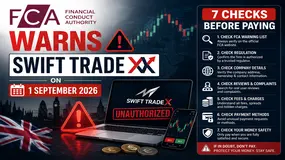
FCA warns Swift TradeX in a notice first published and updated on 1 September 2026. The UK Financial Conduct Authority says the firm may be providing or promoting financial services without permission, is not authorised, and may be targeting people in the UK. The notice names the website swifttradexai.com, a Worcester address and a UK telephone number, but also cautions that unauthorised businesses may use incorrect or borrowed contact details. The confirmed issue is authorisation status—not a court finding about every transaction. Anyone considering a payment should stop, verify the firm independently, and avoid using contact information supplied by the platform itself.
ThinkMarkets review for India: check the RBI Alert List, overseas entities, regulation, login security, forex rules, costs, withdrawals, and leverage risk.
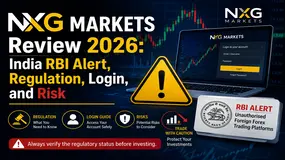
People searching NXG MARKETS regulation or regulation NXG MARKETS need to separate an overseas licence from permission in India. The Reserve Bank of India Alert List, updated 19 November 2025, names NXG Markets and nxgmarkets.com. RBI says listed entities are neither authorised to deal in forex under FEMA nor authorised to run an approved forex electronic trading platform. The broker's own site also says it does not serve residents or citizens of India. This NXG MARKETS review found an overseas Mwali licence record, but no RBI authorisation. No cited court ruling proves fraud. For an Indian user, the local warning and service restriction should control the decision.
WikiFXWikiFXWikiFXWikiFXWikiFXWikiFXWikiFXWikiFXWikiFXWikiFX