Axi Says 46% of Clients Now Hold Crypto Exposure
Axi says 46% of its clients now hold crypto exposure across spot ownership, CFDs, and perpetual contracts, as brokers continue adding more crypto access options.
简体中文
繁體中文
English
Pусский
日本語
ภาษาไทย
Tiếng Việt
Bahasa Indonesia
Español
हिन्दी
Filippiiniläinen
Français
Deutsch
Português
Türkçe
한국어
العربية
Abstract:Australia intensifies efforts to regulate crypto ATMs, targeting money laundering risks. AUSTRAC's task force to ensure compliance with Anti-Money Laundering laws.
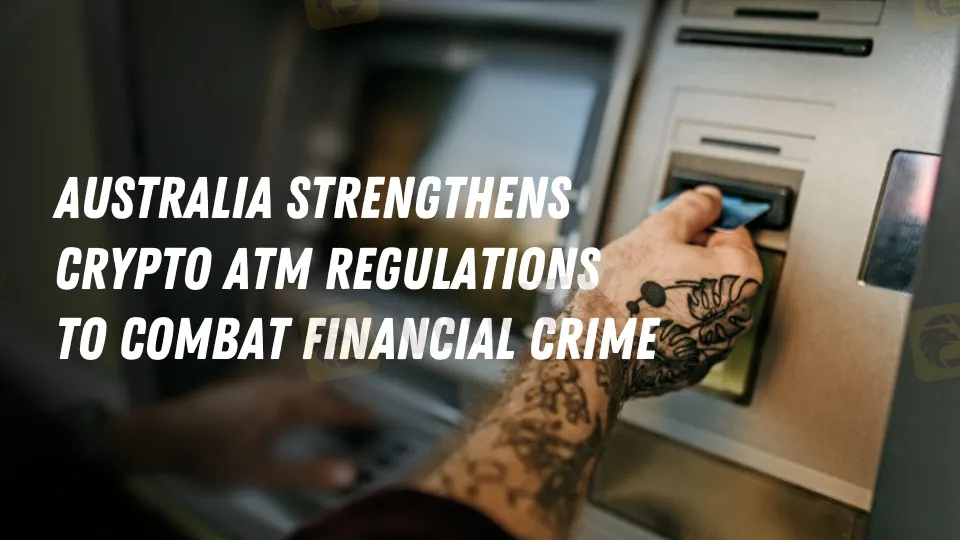
Australia has become the world's third-largest crypto ATM center, which has sparked worries about possible money laundering uses for these machines. The Australian government is addressing this escalating problem and has identified the cryptocurrency sector as a priority for the coming year through AUSTRAC, its national financial intelligence agency.
Brendan Thomas, the CEO of AUSTRAC, said in a statement released on December 6 that the organization is forming a task force to investigate cryptocurrency ATM operators who may not be adhering to AML regulations. “Cryptocurrency and crypto ATMs are attractive avenues for criminals looking to launder money, as they are widely accessible and make near-instant and irreversible transfers,” Thomas explained. According to him, this program is the first stage in AUSTRAC's larger goal of lowering cryptocurrency-related crimes in Australia by 2025.
The task group wants to guarantee that crypto ATM operators adhere to minimal requirements in order to stop illegal money from moving through these devices.
Coinflip (with 680 ATMs), Localcoin (465), and Cryptolink (75) are prominent cryptocurrency ATM providers in Australia. These operators already need to monitor transactions, register with AUSTRAC, and conduct Know Your Customer (KYC) checks. In addition, they have to produce threshold transaction reports for deposits and withdrawals exceeding $6,500 (10,000 Australian dollars) and report suspicious activity.
Thomas stressed that operators that violate the law risk “significant financial penalties.” Money laundering in Australia has a maximum sentence of 12 years in prison, fines exceeding $100,000, or both. The penalties are more severe if the amount of money laundered exceeds $644,400, with fines of up to $214,585 and jail terms of up to 25 years.
With over 1,300 installed by April 2023, Australia has had a sharp increase in the number of cryptocurrency ATMs, surpassing the total in key Asian markets including China, Japan, and India. Due to significant private sector investments, this upsurge started in late 2022.
With more than 31,000 Bitcoin ATMs and 81% of the global market, the United States presently dominates the world. With about 3,000 machines and 7.8% of the market, Canada comes in second.
In conclusion,
The growing concern over cryptocurrency ATMs' potential for money laundering is highlighted by Australia's push to regulate them. Operators must make sure that anti-money laundering regulations are followed in order to prevent serious repercussions from the increased enforcement and fines. Regulators play an increasingly crucial role in protecting the financial system as the use of cryptocurrencies grows.


Disclaimer:
The views in this article only represent the author's personal views, and do not constitute investment advice on this platform. This platform does not guarantee the accuracy, completeness and timeliness of the information in the article, and will not be liable for any loss caused by the use of or reliance on the information in the article.

Axi says 46% of its clients now hold crypto exposure across spot ownership, CFDs, and perpetual contracts, as brokers continue adding more crypto access options.

Have you made profitable trades on the OANDA platform but failed to withdraw anything? Have you been subject to manipulations in stop-loss and other trade orders? Did the United States-based forex broker delay both your deposits and withdrawals? In between, did the customer support service fail to resolve your queries? You are not alone! Several traders have reported these incidents on broker review platforms such as WikiFX. In this OANDA review article, we have examined these allegations for you to glance at. Read on!

XPO, a Belize-based multi-asset broker, has been in the news lately for the wrong reasons. These include the infamous allegations from 450K people towards the end of 2025 in India. The collective siphoned amount goes up to $420 million. According to news reports, the trading platform is still active, making it extremely important for traders to adopt extreme caution. The reviews shared by the users on WikiFX are not encouraging either. We have covered the perils associated with this brokerage entity holistically in this XPO review article. We will approach by outlining the company details before sharing the user allegations. Let’s begin!

When looking for a broker, you need to ask one important question: Will my capital be safe? For Trader's Way, this question comes up on many forums and review websites. A quick search shows mixed results - some people praise it highly, while others make serious accusations. This makes it hard to know what's true. Is Trader's Way a real trading platform or a risky choice you should avoid? This article will give you clear answers. We won't give you a basic review. Instead, we'll look carefully at real data that matters for keeping your capital safe. Our research focuses on two main areas: whether the broker follows proper rules and what real users consistently say about it. We'll use information from WikiFX, a global platform that checks broker regulations. WikiFX gives Trader's Way a very low score - a major warning sign that starts our investigation.