


IG Review for India 2026: RBI Alert List, Regulation, Login, and Forex Risk
IG review for India in 2026: see the RBI Alert List entry, overseas regulation, login checks, forex limits, and a clear broker safety checklist.
Original

简体中文
繁體中文
English
Pусский
日本語
ภาษาไทย
Tiếng Việt
Bahasa Indonesia
Español
हिन्दी
Filippiiniläinen
Français
Deutsch
Português
Türkçe
한국어
العربية
اردو




Abstract:Robinhood is reinventing stock trading with tokenized, 24/7 equities on the blockchain—ending settlement delays and redefining how markets move.

 Contents
Robinhood isnt just shaking up Wall Street again—its rewriting the rules of trading. CEO Vlad Tenev has revealed plans to expand the company's tokenized stock offering, enabling investors to trade anytime, anywhere, with near-instant settlement and blockchain-based ownership.
The move is more than a tech update; it‘s a direct response to the chaos of the 2021 GameStop frenzy. Back then, trading halted, outrage exploded, and Robinhood found itself at the center of a market-wide meltdown. Now, Tenev says the real problem wasn’t meme-stock mania—it was America's outdated system for settling trades.
“When trades take days to settle in a world that moves by the second, brokers get squeezed,” Tenev explained. The old system forced platforms like Robinhood to post billions in collateral whenever volatility spiked, ultimately leading to trading limits that frustrated millions of users.

Fast-forward to today, and Robinhoods solution sounds like something out of the future: tokenized stocks. By representing shares as blockchain tokens, trades can settle almost instantly. That cuts out the middle layers of clearing and drastically reduces collateral requirements—meaning no more sudden buying freezes during wild market swings.
In practical terms, this means investors could trade fractional shares of Apple or Tesla at 3 a.m. on a Sunday and settle those trades immediately. Blockchain architecture enables programmable ownership, continuous trading, and direct transfers between users.
Robinhood first rolled out tokenized U.S. equities to its European customers in mid-2025, offering more than 2,000 stocks through its Arbitrum One–based platform. The results were promising enough that the company is now planning for round-the-clock access, along with DeFi-style features such as self-custody and on-chain lending. These next-gen assets will soon live on Robinhoods own Layer 2 blockchain, called Robinhood Chain.
Despite the excitement, Robinhoods path forward depends on clearer U.S. regulations. Current securities laws still apply—even when trades live on-chain—and that leaves plenty of gray area.
Tenev has championed the proposed Clarity Act, a bill designed to give tokenized securities a defined legal home. “We need laws that won't change with every new commission,” he said, emphasizing that consistent rules are the key to innovation and investor protection.
Regulators agree that blockchain doesnt erase the fundamentals—issuers must still follow disclosure, custody, and trading rules. But tokenization challenges long-held assumptions about market hours, intermediaries, and what it means to “own” a share.
If Robinhoods vision succeeds, it could spark the biggest structural shift in trading since the dot-com boom. Instant settlement would shrink clearing times from days to seconds, freeing brokers from massive collateral demands—and giving investors freedom from the clock.
But the implications cut both ways. Continuous markets invite new regulatory questions about transparency, liquidity, and fairness. Still, five years after the GameStop saga, Robinhood sees blockchain not as a speculative play, but as the fix the financial system has needed all along.
The stock market may never sleep again—and Robinhood wants to make sure it doesn't have to.

Disclaimer:
The views in this article only represent the author's personal views, and do not constitute investment advice on this platform. This platform does not guarantee the accuracy, completeness and timeliness of the information in the article, and will not be liable for any loss caused by the use of or reliance on the information in the article.
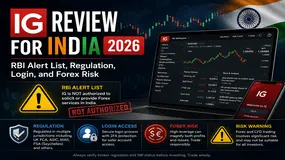
IG review for India in 2026: see the RBI Alert List entry, overseas regulation, login checks, forex limits, and a clear broker safety checklist.
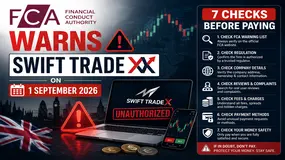
FCA warns Swift TradeX in a notice first published and updated on 1 September 2026. The UK Financial Conduct Authority says the firm may be providing or promoting financial services without permission, is not authorised, and may be targeting people in the UK. The notice names the website swifttradexai.com, a Worcester address and a UK telephone number, but also cautions that unauthorised businesses may use incorrect or borrowed contact details. The confirmed issue is authorisation status—not a court finding about every transaction. Anyone considering a payment should stop, verify the firm independently, and avoid using contact information supplied by the platform itself.
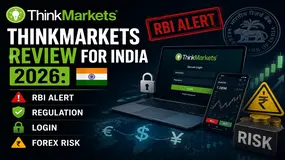
ThinkMarkets review for India: check the RBI Alert List, overseas entities, regulation, login security, forex rules, costs, withdrawals, and leverage risk.

India's Q1 FY27 GDP grew 7.8%, beating a 7.4% poll and RBI's 7.0% projection. See three conditional scenarios for INR, rates and gold.
WikiFXWikiFXWikiFXWikiFXWikiFXWikiFXWikiFXWikiFXWikiFXWikiFX