


India Q1 FY27 GDP Growth Hits 7.8%: 3 Scenarios for INR and Gold
India's Q1 FY27 GDP grew 7.8%, beating a 7.4% poll and RBI's 7.0% projection. See three conditional scenarios for INR, rates and gold.
Original

简体中文
繁體中文
English
Pусский
日本語
ภาษาไทย
Tiếng Việt
Bahasa Indonesia
Español
हिन्दी
Filippiiniläinen
Français
Deutsch
Português
Türkçe
한국어
العربية
اردو




Abstract:Mastering forex broker regulation ensures you avoid pitfalls and select trustworthy platforms. We’ll cover regulator types, license details, the distinction between licensed and registered, and practical steps.
 Contents
Forex broker regulation is the cornerstone of safe trading in the world's largest financial market, valued at $7.5 trillion daily. Without proper oversight, brokers can manipulate trades, delay withdrawals, or vanish overnight.
In 2025 alone, global regulators reported more than 10,000 complaints against unregulated firms, resulting in massive losses for retail traders. This guide equips you with essential knowledge about forex broker regulation, from top regulators and their licenses to how to spot scams.
Whether you‘re a beginner in the Philippines or a seasoned global trader, understanding forex broker regulation prevents costly mistakes. We’ll explore types of regulators, what licenses cover, the distinctions between licensed and registered, and verification methods—including the powerful WikiFX app for quick regulatory checks.
Recent trends indicate stricter enforcement: leverage caps have been tightened to 1:30 in key regions, and compensation funds have been expanded. Tools like the WikiFX app complement official checks for faster insights.
Prioritizing forex broker regulation isn‘t optional; it’s your shield against the 70% of retail traders who lose money annually. Lets dive in.
Strong forex broker regulation mandates segregated client accounts, ensuring your funds stay separate from thebrokerss operations. If a firm fails, you reclaim your money via independent custodians.
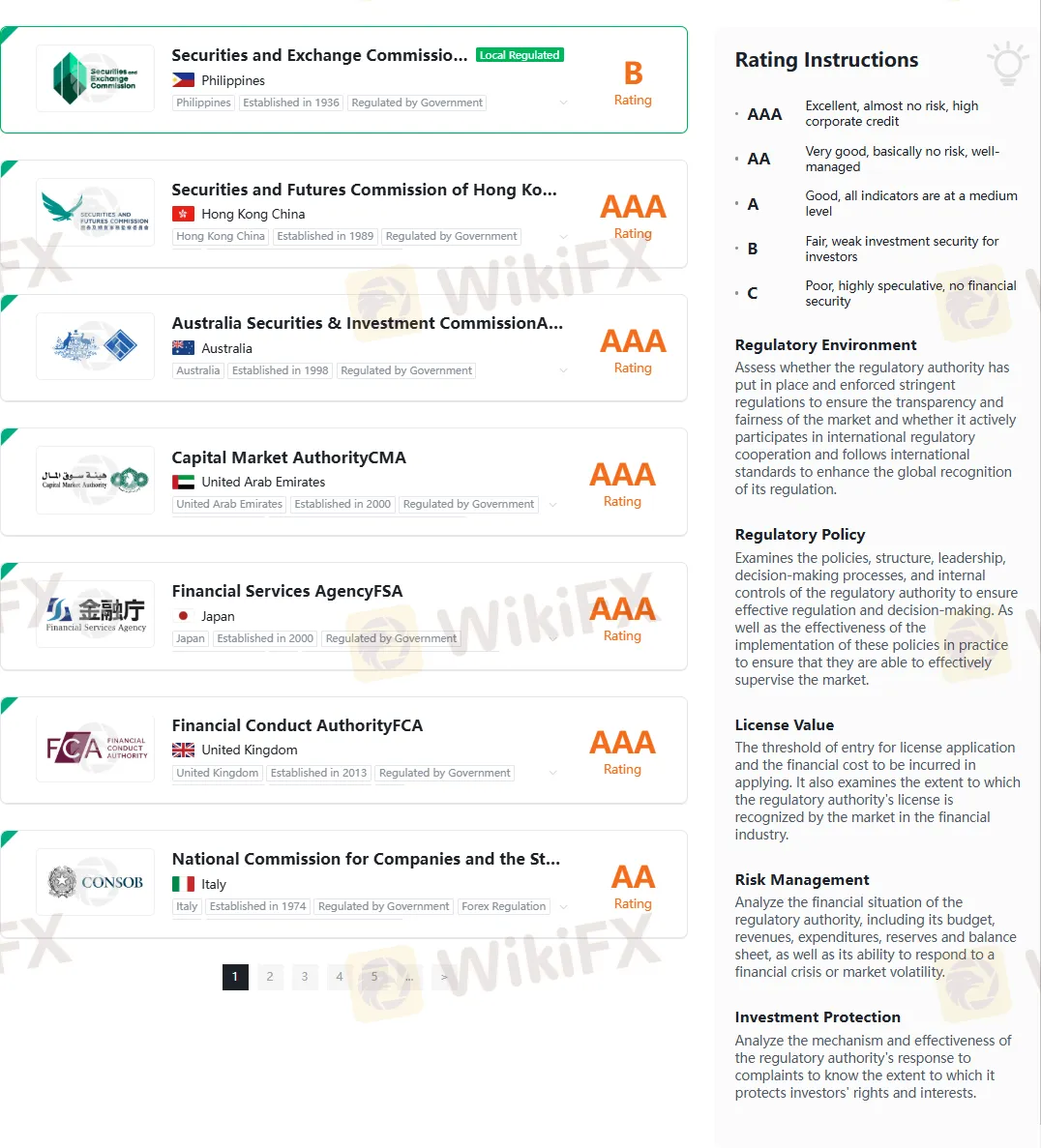
Top regulators enforce annual audits, anti-money laundering (AML) compliance, and transparent pricing. Compensation schemes kick in during insolvency—FCA offers up to £85,000 per client, while ASIC mandates swift dispute resolution.
2026 brings heightened scrutiny post-2025 scandals, including offshore broker collapses. Expect AI-driven monitoring for market abuse and bans on high-risk bonuses. Unregulated platforms lure with 1:500 leverage but lack recourse, amplifying losses.
In the Philippines, SEC oversight focuses on local stability, protecting against fly-by-night operators. Forex broker regulation also covers negative balance protection, preventing debt beyond deposits.
Always choose Tier-1 regulated brokers to sleep soundly—your capital deserves it.
Forex broker regulation varies by tier, reflecting the strength of oversight and trader protections. Tier 1 offers the gold standard; Tier 3 signals caution.
Tier 1 Regulators (Highest Safety)
Tier 2 Regulators (Solid Protection)
Tier 3/Offshore Regulators (Approach with Caution)
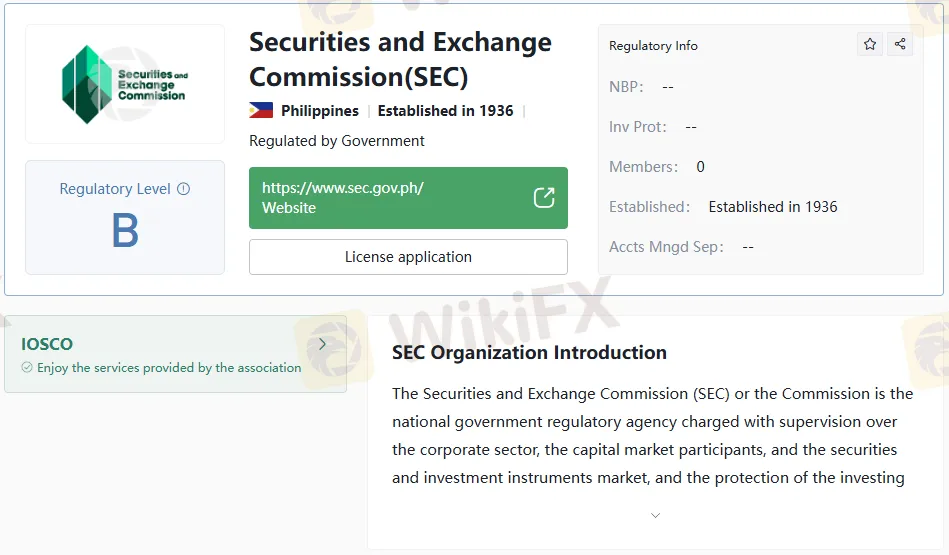
For Filipinos, the SEC (Philippines) regulates securities brokers, while BSP handles e-money; check both for local compliance.
| Regulator | Tier | Country | Compensation | Leverage Cap | Risk Level |
| FCA | 1 | UK | £85K | 1:30 AM | Low |
| ASIC | 1 | Australia | Segregated | 1:30 AM | Low |
| CySEC | 2 | Cyprus | €20K | 1:30 AM | Medium |
| SEC-PH | 2 | Philippines | Dispute aid | Varies | Medium |
| FSC Belize | 3 | Belize | None | 1:500+ | High |
This table highlights why forex broker regulation tiers matter—stick to Tier 1 for peace of mind. WikiFX app rates these instantly with real-time regulatory sync.
Forex broker regulation licenses define exact protections—know them to assess brokers accurately.
FCA Full Authorization: Mandates AML/KYC, quarterly reporting, negative balance protection, and public warnings on risky products. Covers retail CFDs/Forex; excludes crypto derivatives without add-ons.
ASIC AFSL: Requires two-yearly audits, no inducement bonuses, and segregated accounts at Australian banks. AFCA resolves disputes for clients free of charge up to AUD 1M.
CySEC CIF License: Investor Compensation Fund (€20K max), transaction transparency to ESMA, and leverage limits under ESMA rules.
CFTC/NFA Compliance: Rule 2-36 for Forex; bans hedging/payment-for-order-flow. US residents get NFA BASIC for verification.
BaFin License: Full MiFID II, including best execution and product intervention powers.
Tier 2 examples, like FSCA, require capital adequacy and annual reviews. Offshore VFSC (Vanuatu) licenses cover registration only—no fund safeguards or audits.
Prioritize these 10 licenses in 2026:
ASIC Professional Registers. Multi-licensed brokers like IG excel here. The WikiFX app displays license scopes in a single search. Always match license scope to your trading style.
Forex broker regulation distinguishes “licensed” from “registered”—a critical nuance scammers exploit.
Licensed brokers hold full authorization to solicit/execute client trades under strict oversight. Registered ones merely notify regulators, lacking enforcement.
| Aspect | Licensed Brokers | Registered Brokers |
| Oversight | Full audits, reporting | Notification only |
| Client Funds | Segregated + compensation fund | Often commingled, no protection |
| Examples | XM (CySEC licensed), IG (FCA) | US Introducing Brokers (NFA) |
| Risk Level | L w—recourse available | High—limited accountability |
| Verification | Official public database | Basic listing, no details |
XM‘s CySEC license ensures ICF coverage; NFA-registered IBs route client funds to FCMs but don’t custody them. WikiFX app flags these distinctions via risk scores and clone detectors. Red flag: Claims like “FCA registered” without FRN (Firm Reference Number)—demand full status.
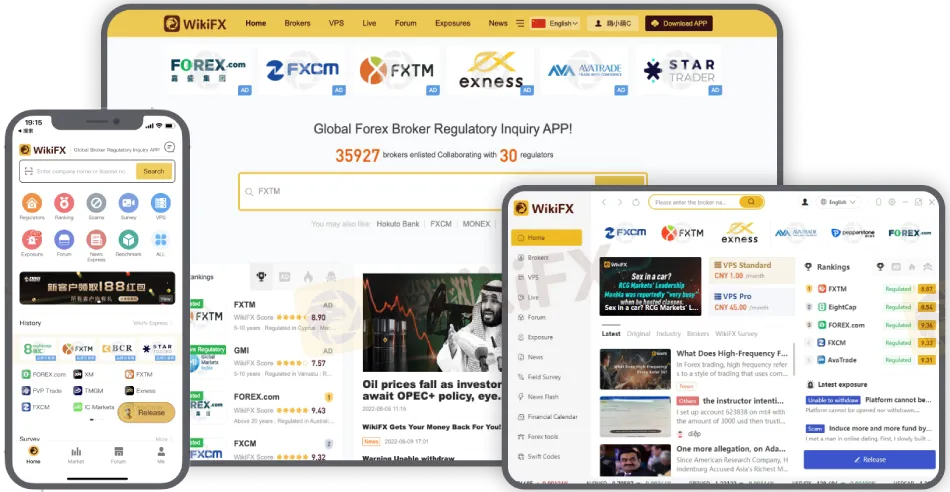
Verify a forex broker's regulation in minutes to sidestep fraud. The WikiFX app streamlines this as your first-line tool, syncing data from 30+ regulators, including FCA, ASIC, and NFA. Download free on iOS/Android for instant broker profiles, licenses, and scam alerts.
WikiFX Verification Workflow:
Follow these official steps next:
Philippines example: WikiFX app scans SEC CMC; clones fail instantly. Pro tip: Re-verify quarterly—WikiFX sends alerts.
Pro Checklist:
Download our free forex broker regulation verification PDF. WikiFX app makes it effortless—your ultimate broker escort.
Even savvy traders fall for traps in forex broker regulation. Watch these 7 red flags—WikiFX app exposes most via its scam list and clone detectors:
Unregulated brokers topped 2025 blocklists. The WikiFX app provides field survey and complaint data—verify first!
Forex broker regulation is your ultimate safeguard—prioritize Tier-1 licenses, verify rigorously with the WikiFX app, and trade protected.
Grab your free 2026 Forex License Verification Checklist PDF now! [Download here]. Explore our full series on safe brokers. Download the WikiFX app today and stay scam-free.
Disclaimer:
The views in this article only represent the author's personal views, and do not constitute investment advice on this platform. This platform does not guarantee the accuracy, completeness and timeliness of the information in the article, and will not be liable for any loss caused by the use of or reliance on the information in the article.

India's Q1 FY27 GDP grew 7.8%, beating a 7.4% poll and RBI's 7.0% projection. See three conditional scenarios for INR, rates and gold.
Choosing a forex liquidity provider is not a search for the lowest displayed spread or the longest provider list. It is a broker decision about pricing integrity, depth, routing, credit, reporting, incident response, and client communication. This 2026 guide explains how a forex LP, FX liquidity provider, or liquidity provider forex arrangement fits into a broker’s execution chain; what to test before onboarding; why a “best forex liquidity provider” claim cannot replace due diligence; and how to compare cost beyond commission. Use the execution-quality scorecard, provider questions, routing scenarios, and 90-day onboarding plan to assess whether a liquidity relationship can support your actual client mix, instruments, risk model, and jurisdiction. The goal is not to make a universal ranking. It is to build evidence that your broker can explain, supervise, reconcile, and recover its execution service when market conditions are difficult.
The visible fee in an MT4 white label proposal is rarely the real cost of operating it. For an existing broker, the decision is not simply whether an MT4 white label platform is “cheap” or “expensive.” The real question is whether the commercial model remains viable after integration, support, data, client migration, compliance, and exit costs are included. That is why an MT4 white label cost review should be built as a 24- to 36-month operating case. It should compare three credible choices: 1. Keep the present MT4 setup and improve its weakest controls. 2. Replace the MT4 white label provider but retain the client proposition. 3. Migrate selected clients or products to another platform while running MT4 in parallel. This guide explains how to build that case without relying on headline prices or generic vendor claims.
Withdrawal delays are precisely the complaint we keep receiving on WikIFX, a veteran in the forex regulation inquiry space. While some users receive withdrawal access initially and find rejections on their applications later, some fail to receive a single approval. Some delays usually result from genuine compliance requirements that brokers need to adhere to. However, in many cases, traders have accused the broker of repeated excuses as part of its alleged strategy to deny a seamless fund release. A pending withdrawal cannot be an outright indicator of fraudulent activity. Financial institutions, including forex brokerage entities, need to abide by the anti-money laundering (AML) and Know Your Customer (KYC) regulations. However, as the monitoring process stretches beyond weeks or months, traders become frustrated and raise questions over the broker’s reliability.
WikiFXWikiFXWikiFXWikiFXWikiFXWikiFXWikiFXWikiFXWikiFXWikiFX