Abstract:WikiFX issues a warning over unlicensed trading sites posing as established brokers, highlighting the lack of regulatory safeguards and growing risks of fraud and investor losses.
WikiFX monitoring has recently identified a series of impersonation websites designed to mislead investors by directly copying the identities of well-known, regulated brokers. These cases do not involve vague look-alikes or loosely inspired designs. Instead, the fake platforms use the real brokers logos and brand names, while operating under unrelated domain names.
Such impersonation schemes are particularly dangerous because they rely on the credibility already built by legitimate firms. Investors may believe they are interacting with a regulated broker, when in reality they are dealing with an unlicensed and unrelated website.
This article outlines three recent cases flagged by WikiFX, involving the impersonation of XSMarkets, FXTM, and Taurex.
 Contents
xsmarketsa.com: Impersonating XSMarkets
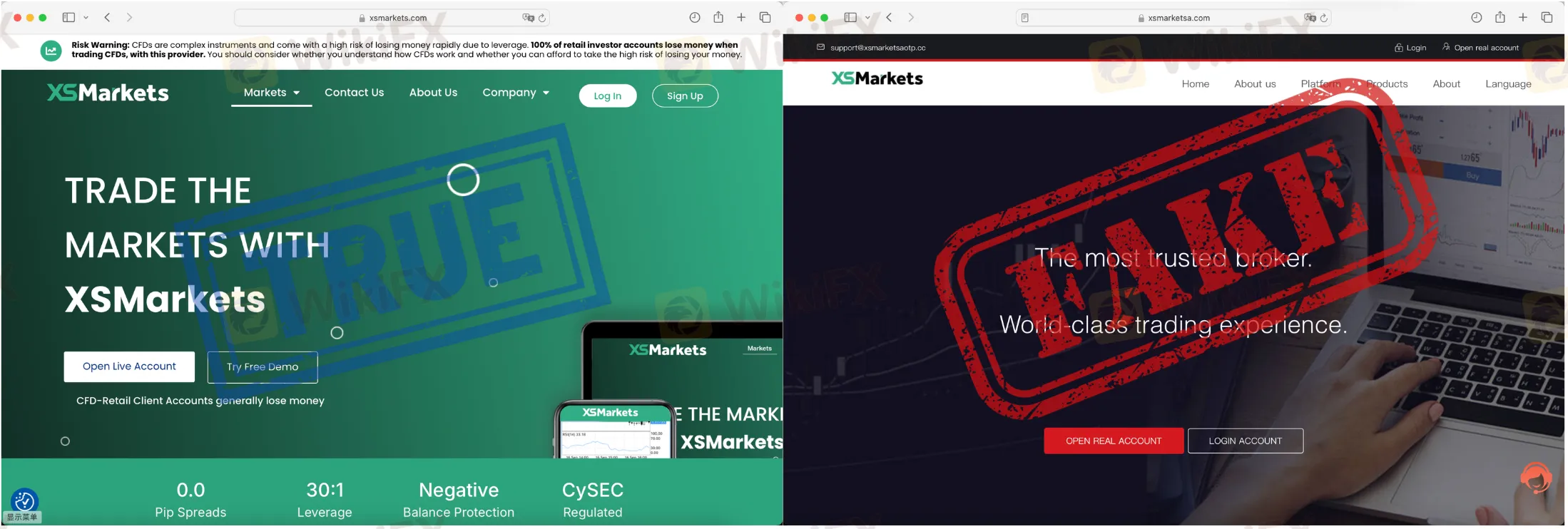
The website xsmarketsa.com presents itself as XSMarkets, using the brokers name and logo to create the impression of legitimacy. However, verification through WikiFX shows that this domain is not connected to the regulated XSMarkets entity.
According to WikiFX records, the legitimate XSMarkets operates under regulatory supervision in Cyprus and holds a valid investment license. Its official information, regulatory status, and operational history can be independently confirmed through the WikiFX broker profile.
https://www.wikifx.com/en/dealer/2266154299.html
By contrast, the domain xsmarketsa.com does not appear in any regulatory register linked to XSMarkets. The use of the XSMarkets name and branding on this site therefore constitutes identity impersonation, exposing users to significant financial risk.
charlesz.vip: Impersonating FXTM
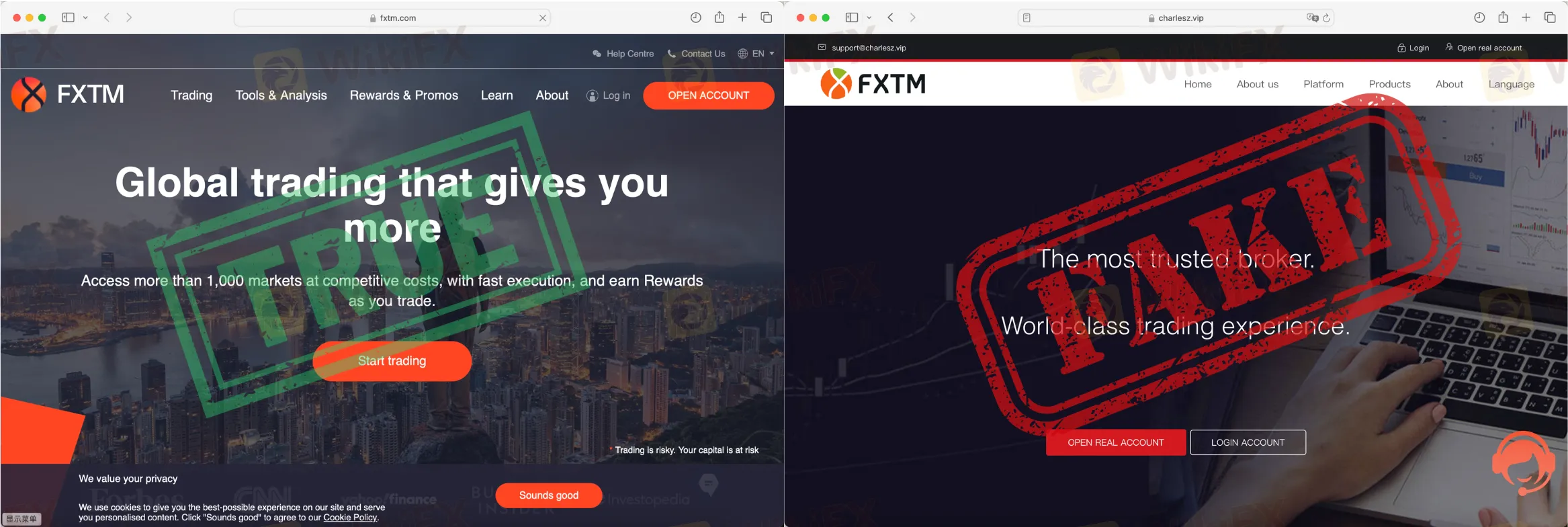
A similar pattern appears in the case of charlesz.vip, which impersonates FXTM (ForexTime). Although the domain name itself does not contain “FXTM,” the website openly uses FXTMs logo and presents itself as the broker.
FXTM is a long-established international broker with multiple regulatory licenses and a clearly documented operational history. WikiFX data confirms that FXTM has been operating for over a decade and is subject to regulatory oversight in several jurisdictions.
The legitimate FXTM profile can be verified here:
https://www.wikifx.com/en/dealer/3351410785.html
The impersonation website charlesz.vip has no regulatory authorization and no confirmed link to FXTM. Investors who rely solely on branding or logos, without verifying the domain and license information, may mistakenly believe they are dealing with the genuine broker.
taurexyd.com: Impersonating Taurex
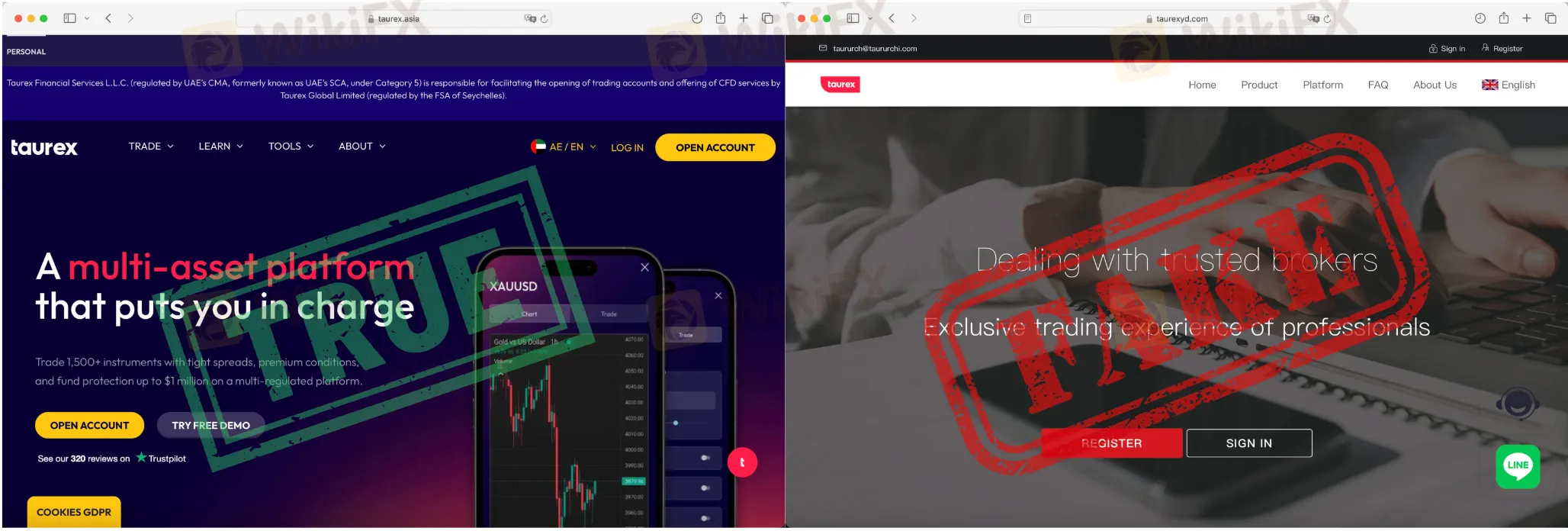
The third case involves taurexyd.com, a website impersonating Taurex by directly using its brand identity. As with the previous cases, the impersonation relies on the reputation of a regulated broker to gain user trust.
WikiFX records show that the real Taurex operates under regulatory supervision and holds recognized licenses. Its official corporate and regulatory information is publicly available and verifiable.
The verified Taurex profile is available at:
https://www.wikifx.com/en/dealer/2831566703.html
The domain taurexyd.com, however, is not associated with the licensed Taurex entity and does not appear in any official regulatory records. The use of the Taurex name and branding on this site therefore represents another clear case of impersonation.
A Common Risk Pattern
Across all three cases, the core risk does not lie in visual similarity alone, but in brand misuse. These impersonation websites adopt the names and logos of regulated brokers while operating under unrelated domains and without authorization.
This approach exploits a simple assumption many investors make: that a familiar name or logo guarantees legitimacy. In reality, regulatory protection applies only to the licensed entity operating under its official domain, not to third-party websites using copied branding.
Why Independent Verification Matters
These cases highlight why independent verification tools have become essential in modern online trading. Regulators license specific legal entities and domains—not brand names in isolation.
WikiFX helps investors bridge this gap by consolidating regulatory data, license records, operational history, and risk alerts in one place. By checking a brokers WikiFX profile before engaging, investors can confirm whether the website they are visiting actually belongs to the licensed entity.
Final Note to Investors
Impersonation scams are evolving. Rather than inventing new brands, fraudsters increasingly borrow trust from existing ones.
Before registering or transferring funds, investors should:
- Confirm the brokers official domain
- Verify licensing and regulatory status through independent sources
- Be cautious of platforms that use well-known names without transparent regulatory confirmation
In an environment where identity misuse is becoming more common, verification is no longer optional—it is a necessity.