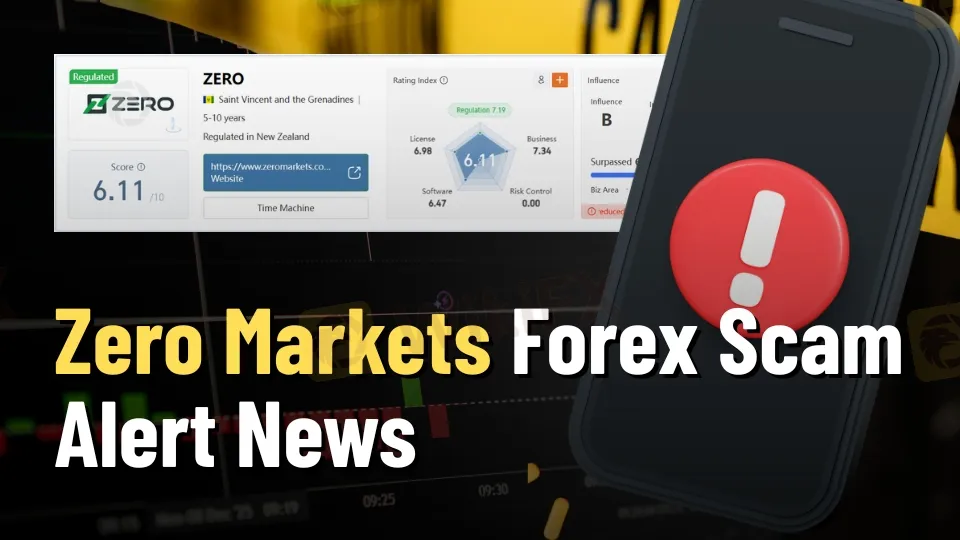
Abstract:Zero Markets faces allegations of scamming after blocking a $116K withdrawal from a South Korean trader (Dec 2025). FMA-regulated, but with red flags. Verify forex scams now!
 Contents
Introduction: Why Zero Is Under Fire
Zero Markets, often shortened to Zero, presents itself as a regulated forex and CFD broker with global reach and modern trading tools. Yet a serious complaint involving a blocked withdrawal of about $116,111 from a South Korean client in December 2025 has raised urgent scam alert concerns. This exposure article examines those red flags and explains how the WikiFX App helps traders evaluate such forex scams before committing funds.
Brief Overview of Zero Markets
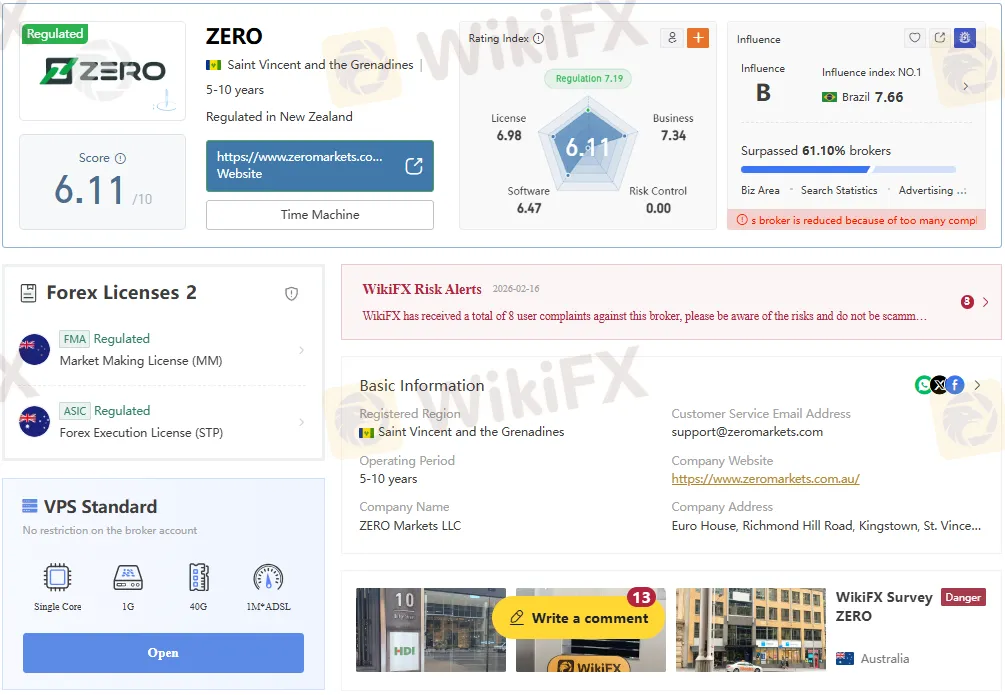
Zero Markets was founded in 2016 and is part of a group of entities that includes Zero Financial Pty Ltd and Zero Markets LLC. The broker is registered in Saint Vincent and the Grenadines, while its New Zealand arm, ZERO MARKETS (NZ) LIMITED, holds a Market Making license with the Financial Markets Authority (FMA), license number 569807. On paper, Zero offers access to forex, share CFDs, indices, commodities, metals, and cryptocurrencies via MT4 and MT5, with leverage up to 1:500 and a minimum deposit of 100 AUD.
Trading Conditions That Attract Investors
Zero offers several account types, including Standard, Islamic Standard, Islamic Raw, and Super Zero, designed for different trading styles. Spreads start from around 1.0 pips on the Standard account with no commission, while the Super Zero and Islamic Raw accounts advertise spreads from 0 pips but add commissions starting at about $2.50 per side or per 100,000 volume. Combined with instant deposits via cards, e-wallets, online banking, and crypto, plus social trading and demo accounts, these features can easily attract retail investors who may overlook potential risks of forex investment scams.
Deposit and Withdrawal Setup vs. Reality
On its profile, Zero lists multiple deposit methods like Neteller, Skrill, online banking, crypto options, and regional solutions, often highlighting “no deposit fee” and instant funding. Withdrawal methods include e-wallets, online banking, crypto channels, and local systems, with processing times of around 1 business day and clearly stated fees. At first glance, this structure suggests a professional operation, but the South Korean case shows how a forex trading scam pattern can emerge when promised withdrawal times are not honored.
The $116,111 South Korea Case
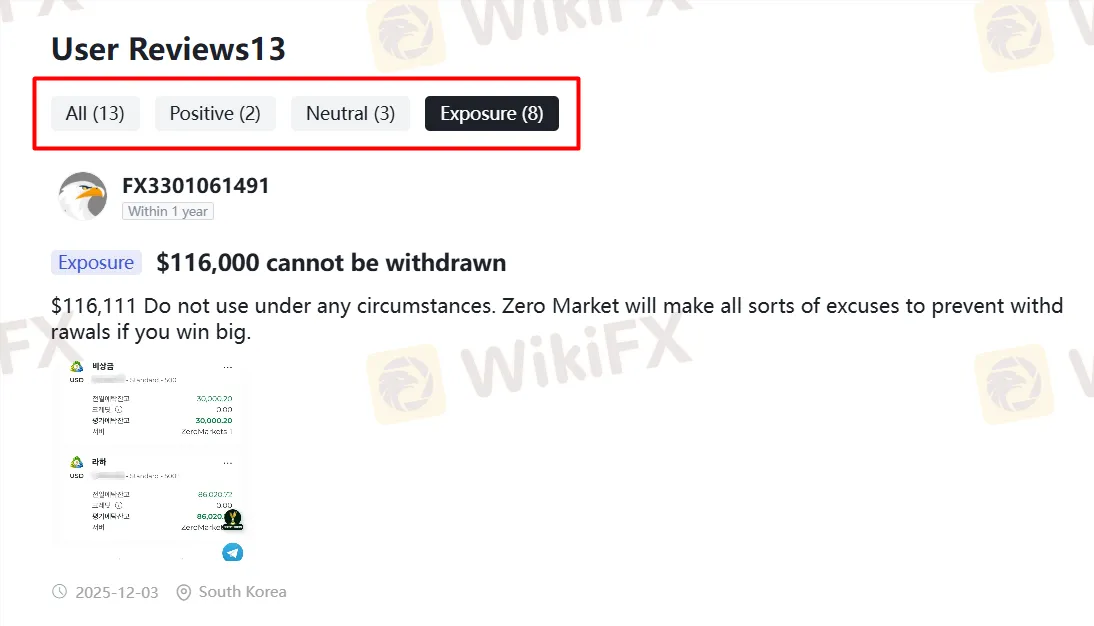
A South Korean trader reported that after achieving significant profits, Zero Markets refused to process a withdrawal of approximately $116,111. According to the complaint, the broker allegedly made “all sorts of excuses” once the account showed large gains, turning a routine request into a prolonged battle. The user ultimately warned others not to use Zero under any circumstances, describing the experience as a forex scam where profits become effectively unreachable.
Why This Pattern Looks Like a Forex Scam
Many forex scams follow a similar script: deposits are smooth, trading platforms function normally, and problems only start once traders request sizable withdrawals. In the reported Zero Markets case, the large profit triggered repeated justifications and delays instead of a straightforward payout, fitting the classic forex trading scam pattern. When a regulated broker behaves this way, it undermines trust and suggests that regulatory status alone does not guarantee safe or fair treatment.
Regulation vs. Investor Safety
Zero Markets emphasizes that its New Zealand entity is regulated by the FMA as a market maker, which might reassure inexperienced traders at first glance. However, regulation can be limited by jurisdiction, group structure, and the specific entity holding the license, meaning that not all clients may enjoy the same level of protection. Traders facing blocked withdrawals may find that enforcement is slow or difficult across borders, which is why independent exposure reports and user reviews remain crucial for spotting a potential forex investment scam early.
Technical Strengths That Can Mislead
The brokers offering of MT4 and MT5 across Windows, macOS, iOS, Android, and web platforms creates the impression of a sophisticated, legitimate trading environment. Tight spreads, high leverage, and social trading features can attract active traders focused on strategy rather than counterparty risk. Yet even well-built platforms cannot compensate for a broker that allegedly refuses to release funds, so technical strengths should never overshadow withdrawal reliability.
How the WikiFX App Helps Expose Zero
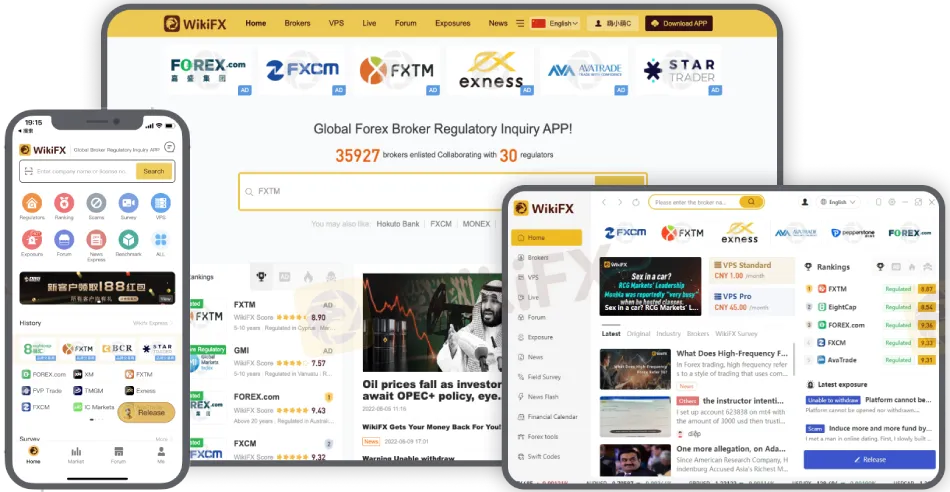
The WikiFX App compiles regulatory information, broker profiles, and user complaints in one place, allowing traders to review both licenses and real-world experiences. By checking Zeros page on the WikiFX App, users can see that, while the broker is marked as regulated, there are also exposure posts describing serious withdrawal issues, such as the South Korea $116K case. This combination of official data and client feedback makes the WikiFX App a practical tool for distinguishing regulated brokers from those exhibiting scam alert behavior.
Using the WikiFX App Before You Deposit
Before sending any funds to Zero or similar firms, traders can search the brokers name inside the WikiFX App and scan its rating, regulatory details, and complaint history. Reading exposure articles and user comments there helps reveal whether withdrawal complaints are isolated or part of a pattern. Taking a few minutes to review those warnings in the WikiFX App can prevent months of stress trying to recover blocked capital from a potential forex scam.
Red Flags to Watch With Zero
Several red flags emerge from the available information: the large blocked withdrawal, the reported excuses after big wins, and the inaccessibility of the official website URL mentioned in the profile. High leverage up to 1:500, aggressive trading conditions, and complex group structures spanning different jurisdictions also increase the risk profile for retail clients. When red flags pile up around a single broker, cautious traders should treat it as a strong scam alert rather than a small operational glitch.
Final Thoughts: Treat Zero With Extreme Caution
Zero Markets combines regulated status, advanced platforms, and attractive trading conditions, but the serious South Korean complaint about a blocked $116,111 withdrawal cannot be ignored. When a broker allegedly pays smoothly on small accounts but resists large payouts, the risk of a forex trading scam becomes too high for prudent investors. Anyone considering Zero should review its exposure page on the WikiFX App, verify all details, and think carefully before entrusting funds to a broker already facing forex scam alerts.