

Global Broker Regulation Inquiry App
About WikiFX
English
简体中文
繁體中文
English
Pусский
日本語
ภาษาไทย
Tiếng Việt
Bahasa Indonesia
Español
हिन्दी
Filippiiniläinen
Français
Deutsch
Português
Türkçe
한국어
العربية
اردو


US Eyes "Global License" Regime for AI Chips to Tighten Grip on Compute Power

WikiFX
|


Abstract:The US is drafting regulations to expand AI chip export licencing globally, potentially requiring sovereign investment commitments in exchange for Nvidia and AMD hardware.
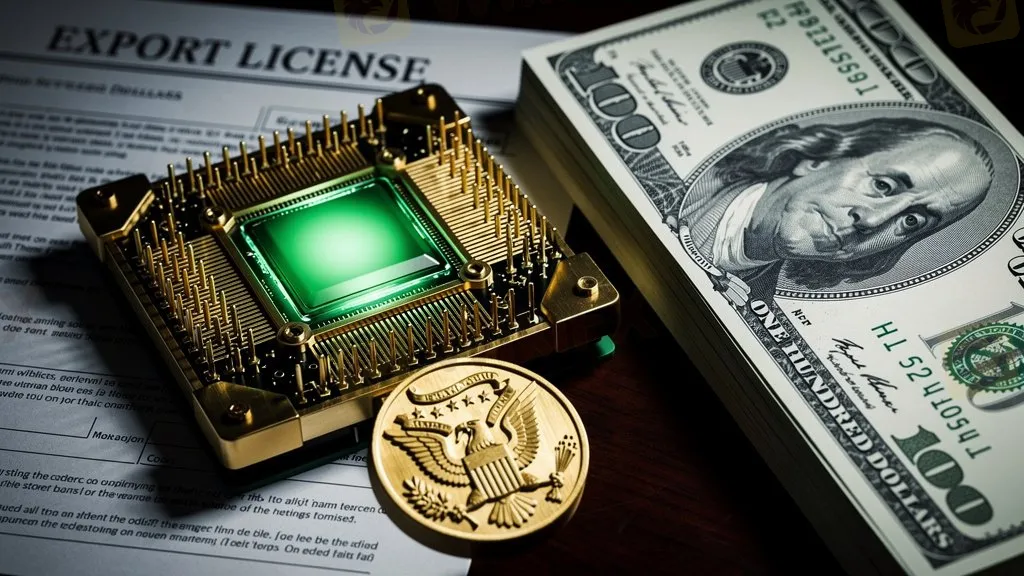
The Trump administration is preparing to overhaul the global semiconductor trade landscape by expanding AI chip export controls from a targeted “blacklist” system to a “global licensing” regime. The draft regulations would require Nvidia and AMD to obtain Department of Commerce licenses for exports to virtually any destination worldwide, effectively placing Washington as the gatekeeper of the global AI infrastructure build-out.
Investment-for-Chips Quid Pro Quo
According to leaked details of the draft, the new framework creates a three-tier clearance system based on compute volume:
- Tier 1 (Small): Simple review for orders under 1,000 units.
- Tier 2 (Medium): Requires disclosure of end-use and potential site inspections.
- Tier 3 (Sovereign/Hyper-scale): For orders exceeding 200,000 units (e.g., GB300 chips), the US may demand diplomatic agreements and reciprocal investment in US technology infrastructure.
Geopolitical Weaponization of Compute
This move institutionalizes the “Middle East Model,” where recent approvals for UAE and Saudi sales were reportedly contingent on investments in US domestic projects. The policy signals that access to high-end silicon (like the H200 and upcoming Rubin architecture) will now be treated as a diplomatic bargaining chip rather than a purely commercial transaction.
For the forex market, this increases the geopolitical risk premium on technology-heavy currencies (TWD, KRW) and could invite retaliatory trade measures, further bifurcating the global tech supply chain. Markets reacted with immediate caution; Nvidia and AMD shares saw intraday pullbacks as investors assessed the potential friction costs of the new regime.
Disclaimer:
The views in this article only represent the author's personal views, and do not constitute investment advice on this platform. This platform does not guarantee the accuracy, completeness and timeliness of the information in the article, and will not be liable for any loss caused by the use of or reliance on the information in the article.
WikiFX Broker
Latest News
British Pound edges higher as USD softens ahead US jobs data
WikiFXNew Zealand Dollar: RBNZ seen hiking in September – UOB
WikiFXPolish Zloty: Fiscal slippage and cautious NBP weigh – Commerzbank
WikiFXUSD/JPY Forecast: Retreats from one-month high but dip-buying eyed
WikiFXGermany flash HICP growth remains slower than expected at 2.9% in August
WikiFXCanadian Dollar strengthens despite hawkish Fed rhetoric
WikiFXEuro: Limited downside, range defined against US Dollar – Scotiabank
WikiFXForex Today: Attention shifts to US ISM, JOLTs and inflation in Europe
WikiFXJapanese Yen: Supported below 160 against US Dollar – Scotiabank
WikiFXAustralian Dollar holds firm amid hawkish Fed and RBA expectations
WikiFX