Abstract:When you look up information about Pepperstone, you'll find a confusing mix of good reviews and serious warnings. Is Pepperstone legit, or is it a scam? Online discussion boards are full of conflicting stories, leaving people who want to trade unsure of who to believe. This article gives you a fact-based answer. Our research looks at official government approvals, real-world investigations, and detailed reviews of actual user experiences.
The answer is complicated. Pepperstone is a heavily supervised broker with licenses from several top government agencies. However, many user complaints, especially about taking funds out of accounts, and warning signs from the independent review site, WikiFX, create a picture that every potential trader must carefully think about before investing.

The Main Question
When you look up information about Pepperstone, you'll find a confusing mix of good reviews and serious warnings. Is Pepperstone legit, or is it a scam? Online discussion boards are full of conflicting stories, leaving people who want to trade unsure of who to believe. This article gives you a fact-based answer. Our research looks at official government approvals, real-world investigations, and detailed reviews of actual user experiences.
The answer is complicated. Pepperstone is a heavily supervised broker with licenses from several top government agencies. However, many user complaints, especially about taking funds out of accounts, and warning signs from the independent review site, WikiFX, create a picture that every potential trader must carefully think about before investing.
Official Government Approval Status
Operating Around the World
The first step in checking any broker is looking at its official licenses. Pepperstone is not just one company but a global group operating under the watch of multiple, well-respected financial authorities. This is a strong sign of being legitimate. Having licenses from organizations, such as the Australian Securities and Investments Commission (ASIC) and the UK's Financial Conduct Authority (FCA), means the broker must follow strict rules about how it acts and shows its finances.
Based on official records, here is a summary of Pepperstone's regulatory status across key countries:
How Government Rules Protect You
Being regulated by these top agencies is not just paperwork; it gives real protection for traders. These systems are designed to create a safer trading environment and give you options if things go wrong. Key protections required by regulators, such as the ASIC, CySEC and the FCA include:
· Separated Accounts: This is a critical safety measure. It means the broker must keep client capital in separate bank accounts from the company's business funds. This ensures that your capital is not used for the broker's business expenses and is protected if the broker goes bankrupt.
· Negative Balance Protection: This protection ensures that traders cannot lose more than they have put in their account. If a market moves strongly against your position, your account balance will not go below zero, protecting you from owing capital to the broker.
· Investor Compensation Programs: Depending on the country (particularly in the UK and Cyprus), traders may be covered by a compensation program. This acts as a last-resort safety net, providing a certain level of capital back to clients if the broker becomes bankrupt and cannot meet its financial obligations.
Looking at the Warning Signs
While strong regulation is a positive sign, it doesn't tell the whole story. The day-to-day reality for traders can be very different. This is where we must look at the large number of user complaints and official alerts that create doubts about Pepperstone's reputation.
The Official WikiFX Warning
Independent broker review platform, WikiFX, has issued specific alerts about Pepperstone, which should be a cause for serious thought. These are not vague rumors but direct warnings based on collected user data. The platform clearly states, *“The WikiFX Score of this broker is reduced because of too many complaints!”*
Furthermore, as of early 2026, the platform notes: *“WikiFX has received a total of 29 user complaints against this broker, please be aware of the risks and do not be scammed!”* This high number of formal complaints signals ongoing problems that potential users must know about.
A Close Look at Complaints
To understand the risks, we need to move beyond the general warning and look at the specific issues traders are reporting. By organizing the 29 complaints filed on WikiFX, clear patterns of problems appear.
Withdrawal & Deposit Issues
This is the most common and alarming type of complaint. Difficulties in getting access to funds are a major red flag for any financial service. Users report a range of problems, including:
· Failed Withdrawals: Multiple users report starting a withdrawal, seeing the status marked as “successful” in their Pepperstone account, but the funds never arrive in their bank or crypto wallet.
· Too Many Document Requests: Some traders claim that when they try to withdraw larger amounts of money, the broker begins asking for a series of additional, sometimes unusual, proof documents, effectively delaying or blocking the process.
· Stuck Deposits: There are reports of funds being sent to Pepperstone but getting stuck in a “pending” status for days, with customer support giving little clarity on the delay or solution.
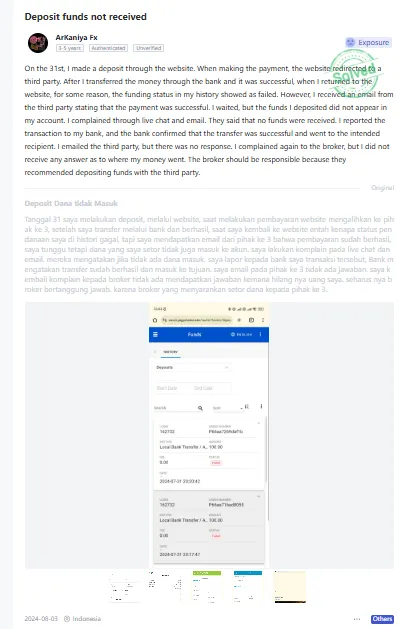
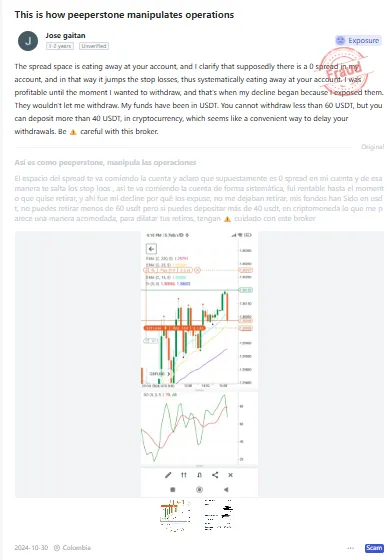
· Withdrawal Amount Limits: One user noted an inability to withdraw less than 60 USDT, while deposits over 40 USDT were allowed, creating a potential trap for smaller accounts trying to exit.
Trading Condition Disputes
Beyond money transfers, many complaints focus on the trading conditions themselves, with some users claiming that the environment is designed to work against them.
· Wide Spreads and Slippage: A recurring theme is the claim of “cutting leeks,” a term for brokers allegedly manipulating spreads or causing slippage to trigger stop-loss orders too early. Users have reported that prices on the platform differ significantly from the broader market.
· Very High Swap Fees: At least one trader provided evidence of what they called “ridiculously expensive” swap fees, where an overnight financing charge for a trade held less than six hours was unusually high.
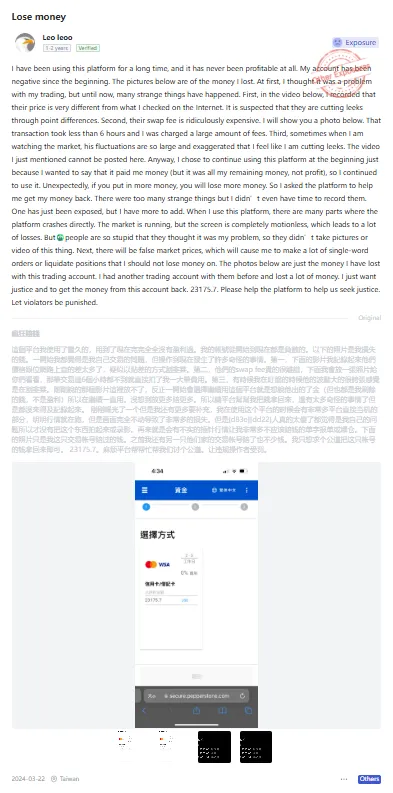
· Platform Problems: Several users have reported platform freezes and crashes, particularly during times of high market activity. When the platform doesn't respond, traders cannot manage or close their positions, often leading to significant losses.
Customer Service & Access
Problems with support and basic account access make the issues above worse, leaving traders feeling abandoned and helpless.
· Unresponsive Support: A common complaint is that customer service is slow to respond or gives unclear answers, especially when dealing with withdrawal problems. Some users report waiting over two days for a response to critical issues.
· Account Login Failures: There are reports of accounts suddenly being unable to log in, preventing access to funds and open trades.
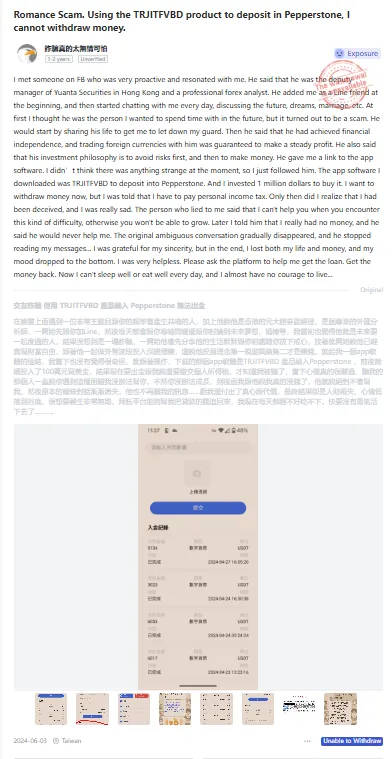
· Fake Representative Scams: A particularly dangerous issue involves people who claim to work with Pepperstone. They trick victims into investing through their “guaranteed profit” schemes. While this is a common scam tactic that affects many brokers, its mention in relation to Pepperstone highlights the need for extreme caution.
What This Means For You
The evidence is clear: While Pepperstone is a regulated company, a significant number of users face serious day-to-day problems. The repeated complaints about fund withdrawals are a major risk factor that cannot be overlooked. These are not isolated incidents but a pattern of behavior reported by traders worldwide.
To see the full, unedited details of every user complaint and assess the risk for yourself, we recommend reviewing the complete Pepperstone report on WikiFX.
Real-World Investigation
Online checking can only go so far. To add another layer of research, WikiFX conducts physical visits to broker offices around the world. This “boots-on-the-ground” approach checks if the company's listed addresses match real, working offices. The findings for Pepperstone are a mix of confirmations and serious concerns.
Confirmed and Working Offices
The investigation found positive results in some locations. Field survey teams were able to verify a physical and functioning Pepperstone office in the following places:
· Cyprus: A verified, operational office was confirmed.
· Dubai (UAE): An office was found at the listed address.
These confirmations show that Pepperstone does have a real, physical presence in some of its key operational centers.
The Worrying Differences
However, the investigation revealed alarming differences in other major countries. In some of the most important regulatory regions, no physical presence could be found.
· United Kingdom: Despite being regulated by the FCA, the field survey concluded: “No Physical Presence Found.”
· Australia: This is the most significant red flag. Australia is Pepperstone's home country and primary region of registration under ASIC. The WikiFX survey team reported a “Danger” alert, stating: “A Visit to Pepperstone in Australia – No Office Found.”
Understanding the Survey Results
What do these conflicting findings mean? The absence of a physical office at a registered address does not automatically prove a broker is a scam. Many modern companies operate remotely. However, for a global financial institution of Pepperstone's size, the lack of a verifiable office in its primary country of incorporation (Australia) and another top-tier regulatory hub (the UK) raises serious questions about operational transparency and the accuracy of its corporate filings. It creates a disconnect between its on-paper credentials and physical reality.
For a visual look at the field survey reports, including photos and verification details, explore the in-depth Pepperstone analysis on WikiFX.
The Trading Environment
Beyond legitimacy and safety, a trader must consider the practical aspects of the platform. An objective look at Pepperstone's trading environment reveals both strengths and weaknesses.
Performance Numbers
Technical performance is critical for execution. Based on data analysis, Pepperstone's environment receives mixed but generally decent ratings:
· Transaction Speed: AAA (Excellent)
· Software Disconnected: AA (Very Good)
· Trading Slippage: B (Average)
· Rollover Cost: A (Good)
This data suggests that, when the platform is operating normally, execution speed is a key strength. However, the “Average” rating for slippage aligns with some of the user complaints about execution quality.
The Cost of Trading
A crucial factor for any trader is the cost of doing business. In this area, Pepperstone receives a poor rating. The WikiFX analysis gives its “Transaction Cost” a grade of “D”. This indicates that the combination of spreads and commissions may be significantly higher than many of its competitors. This data point validates the user complaints about wide spreads and high fees, suggesting that profitability could be challenged by the broker's cost structure.
Platforms and Tools
On a positive note, Pepperstone provides access to a suite of industry-standard trading platforms. This is a sign of a technologically sound operation. Traders can choose from:
· MetaTrader 4 (MT4)
· MetaTrader 5 (MT5)
· cTrader
· TradingView
Offering these well-regarded, third-party platforms ensures a familiar and strong technological foundation for trading activities.
The Final Answer
So, is Pepperstone a legitimate partner or a potential trap? The answer requires careful consideration of two conflicting realities.
Regulation vs Reality
On one hand, Pepperstone is undeniably a legitimate company. It holds multiple licenses from top government regulators such as the ASIC and the FCA. This is not a characteristic of an outright fake or clone broker.
On the other hand, the day-to-day problems reported by a large number of users present a high-risk picture. The number and severity of complaints about withdrawals, trading conditions, and customer support, combined with the concerning lack of a verifiable physical office in Australia, cannot be ignored. Therefore, while Pepperstone is not a scam, the risks of encountering significant financial and operational problems appear to be substantial.
Move Forward with Extreme Caution
Based on this comprehensive analysis, we cannot give a blanket recommendation to trade with Pepperstone. The potential for problems, especially with fund withdrawals, is too high to ignore. If you are still considering this broker, we recommend you proceed with extreme caution and follow these actionable steps to protect yourself:
1. Do Not Rush: Given the number of complaints, you should not deposit a large sum of capital. Avoid any pressure to invest more than you are prepared to risk.
2. Test the Full Process: Start with the smallest possible deposit. Place a few trades to test the platform. Crucially, before depositing more, test the withdrawal process with a small amount of profit or a portion of your initial capital to see if you encounter any delays or issues.
3. Document Everything: From the moment you open your account, keep detailed records. Take screenshots of your deposit confirmations, trade executions, withdrawal requests, and save all email and chat communications with customer support. This documentation is vital if a dispute arises.
4. Stay Informed: The operational status of any broker can change. User complaints and regulatory actions are dynamic.
Before making any final decision or depositing funds, we strongly urge you to review the complete, up-to-the-minute Pepperstone profile on WikiFX, including the latest user reviews and official alerts, to ensure you have the most current information
For more important updates regarding forex brokers, download the new WikiFX app by scanning the QR code.