Abstract:When you look up information about Trader's Way Deposit and Trader's Way Withdrawal, you're really asking an important question: is it safe to move your funds through this broker? This article does more than just explain the steps. We will look at how these processes work, but more importantly, we will discuss the biggest concern of all: Trader's Way works without proper financial oversight.
When a broker isn't properly regulated, it directly affects how safe your capital is, how clear their transactions are, and whether you can get help if something goes wrong. If you have problems with a withdrawal, there's no official agency you can ask for help. Our goal is to give you an honest view based on information anyone can find and real user experiences. This will help you understand these fund processes while knowing the possible risks, so you can make a smart and safe choice.
Introduction: More Than Just Instructions
When you look up information about Trader's Way Deposit and Trader's Way Withdrawal, you're really asking an important question: is it safe to move your funds through this broker? This article does more than just explain the steps. We will look at how these processes work, but more importantly, we will discuss the biggest concern of all: Trader's Way works without proper financial oversight.
When a broker isn't properly regulated, it directly affects how safe your capital is, how clear their transactions are, and whether you can get help if something goes wrong. If you have problems with a withdrawal, there's no official agency you can ask for help. Our goal is to give you an honest view based on information anyone can find and real user experiences. This will help you understand these fund processes while knowing the possible risks, so you can make a smart and safe choice.
The Major Warning Sign: No Regulation
Whether a broker is regulated isn't a small detail—it's the foundation of your financial safety. For Trader's Way, the lack of regulation isn't just a missing feature—it's a major warning sign that affects every deposit and withdrawal you might think about making.
What “No Regulation” Really Means
Working with an unregulated broker removes the standard protections that traders with regulated brokers normally have. Here's what this means for your funds in real terms:
· No Protection for Investors: Regulated brokers are usually part of programs that protect your funds up to a certain amount if the brokerage goes out of business. Unregulated brokers don't offer this safety net. All of your investment is at risk.
· No Separate Fund Storage: Regulated brokers must keep client funds in bank accounts that are separate from the company's business funds. This stops the broker from using your funds to pay their bills. Without regulation, there's a higher risk that your funds are mixed together, possibly being used for business costs and putting them in danger.
· No Official Help: This is the most important point for withdrawals. If a Trader's Way Withdrawal request is delayed, rejected, or your funds simply vanish, there's no regulatory agency to complain to. You're left to deal with the company's customer service alone, with no power or outside authority to make sure you get fair treatment.
Official Warnings from Around the World
The risks with this broker aren't just theoretical. Financial authorities around the world have issued official public warnings against Trader's Way for operating without permission. According to information from the verification website WikiFX, these warnings include:
· ES CNMV (Spain): A warning was issued against the company on December 2, 2019.
· MY SCM (Malaysia): A warning was issued on January 1, 2023.
These alerts are a clear signal from government agencies that a broker may be trying to get clients in places where it doesn't have a license to operate. This is a major sign of a high-risk operation and raises serious questions about whether the broker can be trusted and how it does business.
Check for Yourself First
Before thinking about any transaction, your first step should always be to verify a broker's claims on your own. Only trusting the information on a broker's own website isn't enough, especially when official warnings and a lack of regulation are involved. We strongly recommend checking a complete third-party website for unbiased information.
You can see the full, evidence-based review and low score for Trader's Way on its WikiFX page.
Understanding Deposit Methods
A potential trader's journey starts with a deposit. However, with Trader's Way, understanding the available methods is complicated by a serious lack of clear, verified information. This lack of clarity is, by itself, something to worry about.
The Missing Information
While a broker's website may list common payment options such as credit cards, bank transfers or cryptocurrencies, this information must be double-checked. Independent analysis shows a serious problem. Websites, such as WikiFX, which collect broker information, clearly state “Unknown payment methods” and show no specific information for deposit options.
This lack of transparency is concerning. It may suggest that the broker uses less stable, third-party payment companies or that their available methods can change suddenly and without warning. This can create uncertainty and potential problems when you try to invest in your account.
Known Deposit Information
Despite the confusion around the actual payment channels, some information is available. The broker offers a very low starting point with a stated minimum deposit of $10. This is designed to attract new traders.
This initial deposit gives access to several account types, including:
· MT4.VAR.
· MT4.ECN.
· CT.ECN.
· MT5.ECN.
While a low minimum deposit can seem attractive, it should be considered alongside the broader risks associated with the broker's unregulated status and lack of transparency.
The Main Withdrawal Problem
The most important function of any brokerage is letting clients withdraw their funds and profits smoothly. This is the area where the most serious problems with Trader's Way have been reported, making the Trader's Way Withdrawal process the main concern for its users.
Listed Withdrawal Fees
Publicly available information shows that the fee structure isn't completely clear. One specific fee is noted: a 1.5% fee is charged for certain withdrawals, especially those involving changing funds from USD to GBP. However, a complete fee schedule showing charges for other methods, currencies, or conditions isn't clearly shared. This confusion means traders could face unexpected costs when trying to access their funds.
A Pattern of Problems
The most alarming information comes directly from user experiences. Multiple “Exposure” reports filed on websites, such as WikiFX, show a disturbing picture of the problems traders have faced. These aren't isolated incidents but form a consistent pattern of serious issues.
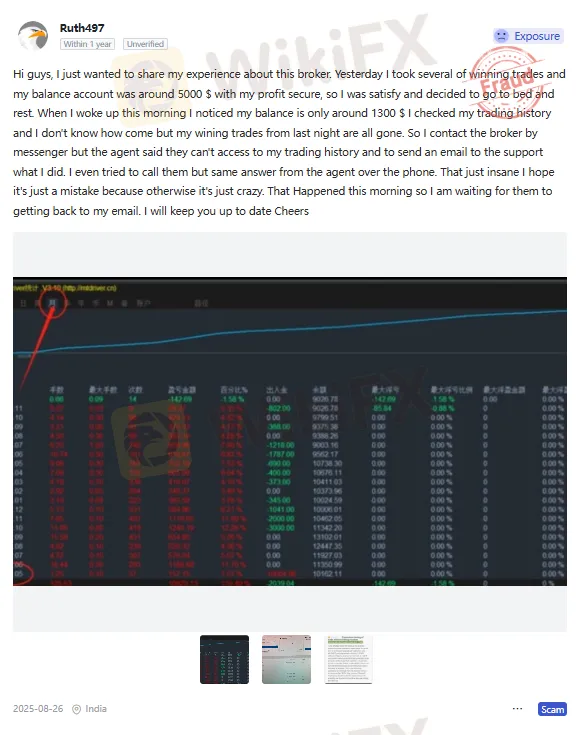
· Vanishing Profits: One user reported a terrible experience where their account balance, which was about $5,000 with secured profits, dropped to around $1,300 overnight. When they checked, their winning trades from the day before had supposedly disappeared from the trading history.
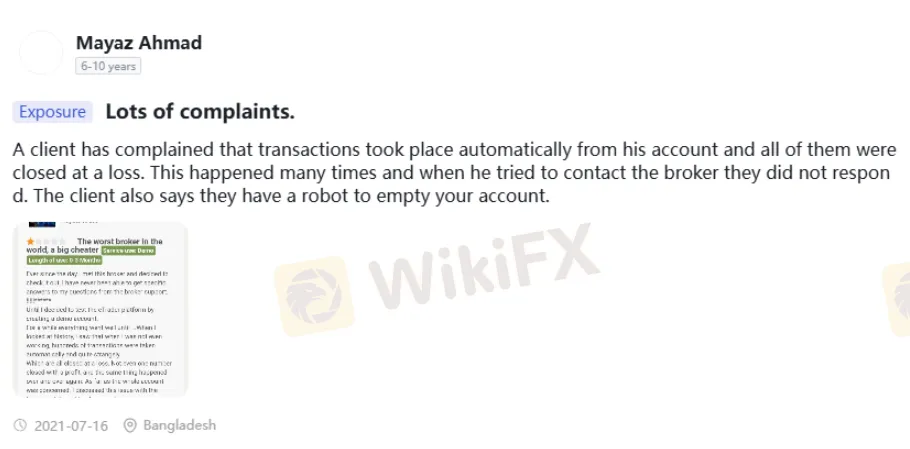
· Unexplained Automatic Losses: Another complaint describes automatic transactions that were executed and closed at a loss without any user action. The user claimed that this happened repeatedly and accused the broker of using a “robot” to empty their account.
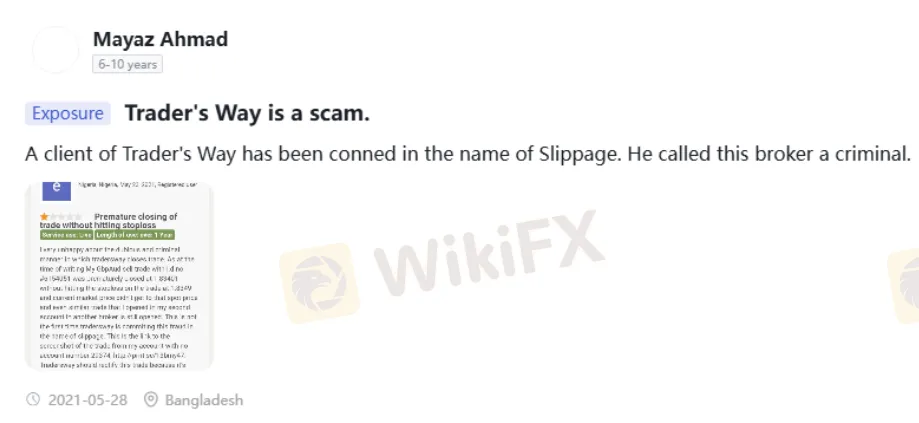
· Slippage Claims: A different user reported feeling “tricked in the name of Slippage,” a term that refers to the difference between the expected price of a trade and the price at which the trade actually happens. The user went so far as to call the broker a “criminal.”
· Unresponsive Customer Support: A common theme in these complaints is the failure of customer support. Users reported that when they reached out for help with these serious issues, support agents claimed they couldn't access trading history and directed them to an email address that supposedly went unanswered.
The Positive Side
To keep an objective view, it's important to note that a small number of positive reviews do exist. Some users have mentioned “fast transactions” and “good customer support.” However, these two positive accounts are greatly outnumbered by the serious, detailed “Exposure” reports and, more importantly, are contradicted by official warnings from global financial regulators.
Before Requesting a Withdrawal
The day-to-day reality of any broker can change quickly. User experiences from last year might not show the situation today. Before you attempt a Trader's Way Withdrawal, it's essential to check for the very latest user feedback and exposure reports.
You can find this real-time information on the Trader's Way profile on WikiFX.
A Safety Action Plan
Given the documented risks, it's important to have a clear, protective strategy. The following checklist provides actionable steps you can take to protect yourself when dealing with any broker, especially an unregulated one like Trader's Way.
1. Step 1: Do Thorough Research. Never rely on just one source of information, especially the broker's own marketing materials. Cross-check all claims on independent verification websites that specialize in broker analysis. Look for regulatory status, official warnings, and unfiltered user reviews.
2. Step 2: Reconsider Your Choices. After reviewing the evidence—the lack of regulation, official warnings, and serious user complaints about withdrawals—ask yourself if the risk is worth it. Thousands of regulated, reputable brokers are available, offering strong investor protections.
3. Step 3: If You Must Continue, Start Small. If you still choose to proceed, deposit only the absolutely required minimum ($10). You must treat this initial amount as funds that you are fully prepared to lose. Don't deposit any funds you can't afford to write off completely.
4. Step 4: Test the Withdrawal Process Right Away. This is the most important test. Don't wait until you have built up significant profits. After placing a few small trades, immediately try to withdraw your initial deposit plus any small profit you may have made. The success, failure, or delay of this small Trader's Way Withdrawal will be your most reliable sign of the broker's honesty.
5. Step 5: Keep Records of Everything. From the very beginning, keep detailed records. Take screenshots of your account balance, your complete trading history, deposit and withdrawal confirmations, and every single communication you have with customer support. This creates an essential paper trail if a dispute comes up.
Final Decision on Transactions
In summary, the decision to deposit or withdraw funds from Trader's Way involves significant, documented risk. The key points are clear and concerning:
· Trader's Way is an unregulated broker, offering no basic investor protections.
· It has received official warnings from financial authorities in both Spain and Malaysia.
· There is a notable lack of transparency regarding the specific deposit and withdrawal methods and their associated fees.
· Most importantly, there are numerous, serious user reports detailing major problems with fund security and withdrawals, including disappearing profits and unresponsive support.
The appeal of a low $10 minimum deposit and high leverage up to 1:1000 may be tempting for new traders. However, these features are completely overshadowed by the substantial risks confirmed by both official regulators and the broker's own clients.
Making a deposit or requesting a withdrawal is the moment of highest risk with any broker. Your financial safety must always be the top priority. Before you commit a single dollar, do your final verification. We urge you to review the complete, up-to-date profile, including all user exposure reports for Trader's Way, on WikiFX. An informed decision is a safe decision.