


FCA Warning Capital Zodiac 7 September 2026 and Seven Checks Before Paying
The FCA named Capital Zodiac as an unauthorised clone on 7 September 2026. Check capitalzodiac.com, capitalzodiac.net and FRN 806702 before paying.
Original

简体中文
繁體中文
English
Pусский
日本語
ภาษาไทย
Tiếng Việt
Bahasa Indonesia
Español
हिन्दी
Filippiiniläinen
Français
Deutsch
Português
Türkçe
한국어
العربية
اردو




Abstract:Discover the risks and features of the All Options broker. Learn about its unregulated status and what it means for Forex trading. Get the latest insights!
 Contents
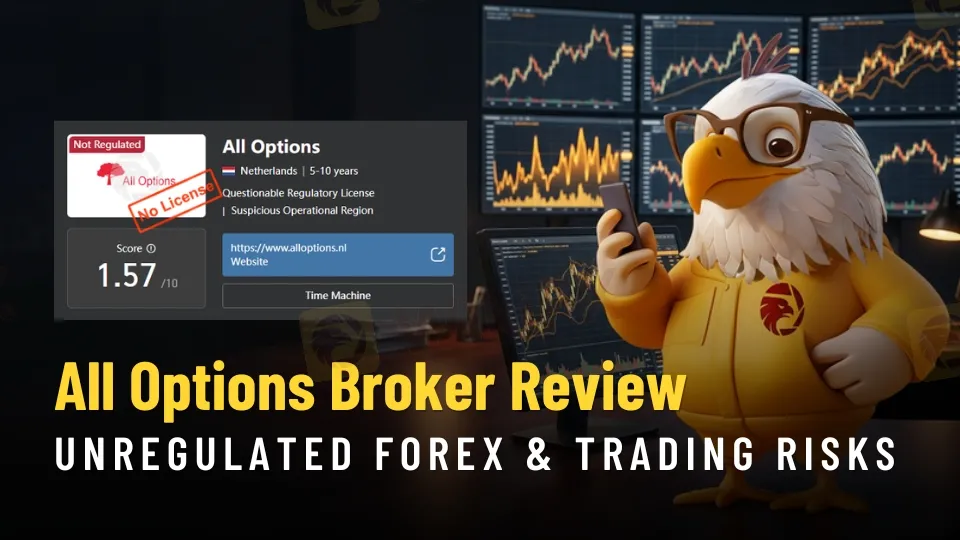
All Options is a proprietary trading firm formally known as All Options International B.V., established in 1998 with operational bases in Amsterdam, Netherlands, and a presence in Austin, Texas (USA). The firm acts as a market maker on European options exchanges, specializing in options contracts and liquidity provision across multiple instruments.
According to its official data, the company trades on major exchanges and provides market-making services, though it does not offer typical retail account structures or publicly advertised trading platforms like MT4/MT5.
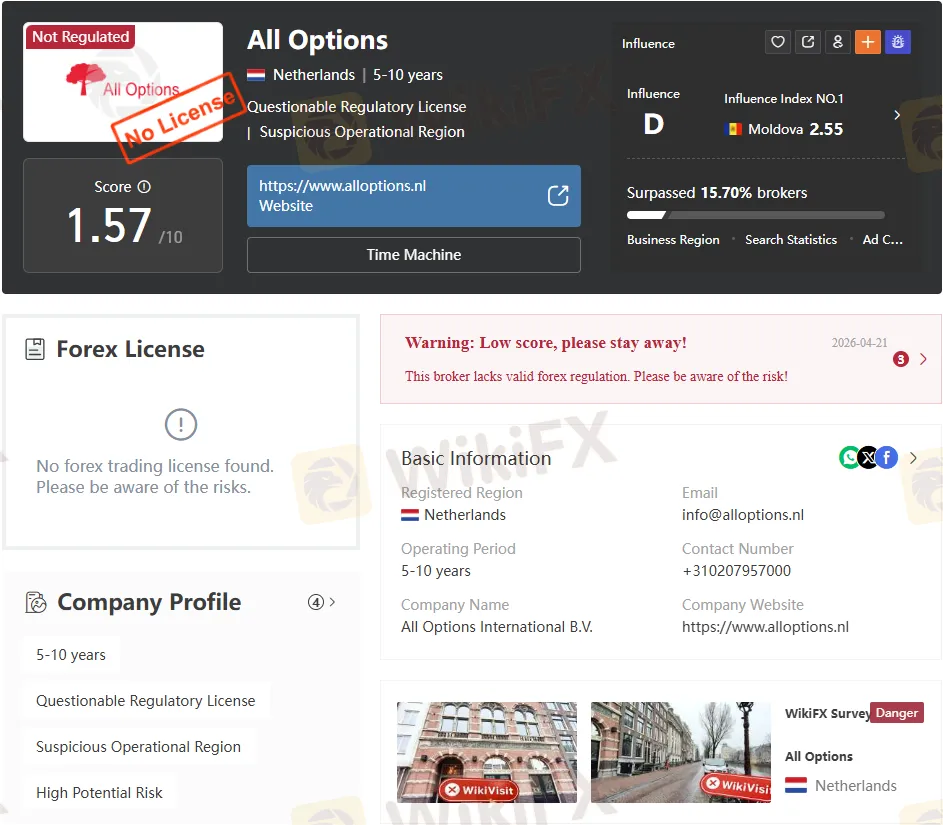
Despite its stated industry involvement, All Options is not regulated by any recognized financial authority, meaning it lacks official oversight from regulators typically associated with safeguarding investors.
One of the most crucial questions traders ask is: “Is All Options regulated?”
Without a license from financial watchdogs such as the FCA (UK), ASIC (Australia), or CySEC (Cyprus), traders have no regulatory protection for deposits, legal recourse, or standardized dispute resolution mechanisms.
The core offering of All Options revolves around option contracts rather than standard trading assets typically associated with retail forex brokers.
This means traders looking specifically for forex-related trading through All Options wont find regulated Forex All Options instruments or spreads comparable with traditional forex brokers.
Because All Options operates without regulation, traders face several well-documented risks:
Without oversight from trusted authorities, client funds may not be segregated or secured under protective frameworks standard among regulated brokers.
Unregulated firms can operate without compliance requirements, exposing traders to operational, legal, and transparency risks that regulated platforms typically mitigate.
Key information, such as account types, leverage, spreads, and execution policies, is not disclosed or verified on authoritative platforms like WikiFX.
Without regulation, there is no guarantee that client trades are executed fairly or that disputes can be resolved through established financial ombudsman mechanisms.
All Options has been in operation since 1998 and is involved in liquidity provision on options exchanges.
However, multiple third‑party sources highlight the lack of a formal trading license or regulatory status, which most legitimate brokers use to demonstrate credibility.
Regulatory bodies in Europe and elsewhere have increasingly warned traders about unregistered entities offering financial products or services without proper licenses, which mirrors the risk profile outlined for All Options.
Although not regulated, All Options lists customer support contact details publicly:
This support is marketed as responsive and professional, though without regulation, theres no obligation for accountability or structured complaint handling.
Regulation All Options is central to assessing the safety and credibility of a broker. Licensed brokers must comply with standards that protect investor funds, ensure transparency, and facilitate dispute resolution—none of which are guaranteed with unregulated entities.
When a broker lacks oversight, traders are exposed to:
Given these factors, traders typically favor regulated trading environments with enforceable investor protections.
Before choosing any broker — especially one like All Options with regulation concerns — tools like WikiFX can be invaluable:
Using these resources empowers you to make informed decisions rather than relying on incomplete or promotional information.
While All Options has a long history in the financial markets and operates as a market maker in options, it lacks a recognized regulatory license, which significantly elevates risk for traders.
If youre seeking a broker for Forex All Options trading, the absence of regulation and typical forex instruments makes this platform unsuitable for most retail traders. Approaching unregulated brokers without investor protections is widely discouraged in financial best practices.
Before investing, always verify regulatory status through independent tools like WikiFX and choose brokers with transparent licensing and investor safeguards.

Disclaimer:
The views in this article only represent the author's personal views, and do not constitute investment advice on this platform. This platform does not guarantee the accuracy, completeness and timeliness of the information in the article, and will not be liable for any loss caused by the use of or reliance on the information in the article.
The FCA named Capital Zodiac as an unauthorised clone on 7 September 2026. Check capitalzodiac.com, capitalzodiac.net and FRN 806702 before paying.
This WEALTH-FX review starts with a licensing statement that needs verification. The client agreement on wealth-fx.com says the company is incorporated in St. Vincent and the Grenadines as 88102 LLC 2021 and is authorised and regulated by the SVG FSA. An official SVG FSA notice, however, says forex trading brokerage activities are not licensed in that jurisdiction. The same agreement separately names WealthFX Liquidity Limited, company 180782, and describes a Mauritius International License. For an India-based reader, those website claims do not replace RBI rules for permitted forex transactions or an independently confirmed licence record.
Did ePlanet, a Comoros-based brokerage, allegedly withhold your dollars on the platform? Did the broker prevent you from accessing the ePlanet login dashboard upon a withdrawal request? Did the broker platform execute trade orders slowly? Have you faced losses due to slippage? This ePlanet review 2026 evaluates user claims while also providing a regulatory overview of the broker.

FCA warns EXOTICINVEST in a notice first published and updated on 3 September 2026. The UK regulator identifies EXOTICINVEST TRADING AND INVESTMENT FIRM and the website www.exoticinvest.ltd, stating that the firm is not authorised and may be targeting people in the UK. This is a dated regulatory warning, not a customer review or a confirmed loss report. Anyone approached through the named website should stop before paying, avoid sharing login credentials and verify the exact business independently through the FCA Firm Checker.
WikiFXWikiFXWikiFXWikiFXWikiFXWikiFXWikiFXWikiFXWikiFXWikiFX