

Global Broker Regulation Inquiry App
About WikiFX
English
简体中文
繁體中文
English
Pусский
日本語
ภาษาไทย
Tiếng Việt
Bahasa Indonesia
Español
हिन्दी
Filippiiniläinen
Français
Deutsch
Português
Türkçe
한국어
العربية
اردو


ThinkMarkets Review 2026: Regulation, Complaints, and Key Risks

WikiFX
|


Abstract:ThinkMarkets is a well-established broker with top-tier regulation from the FCA and ASIC, but it currently faces a high volume of unresolved withdrawal complaints. Indian traders should exercise caution and verify its latest operational status before depositing funds.
While ThinkMarkets holds recognized licenses from heavy-hitting regulators like the FCA and ASIC, a recent spike in user complaints highlights severe withdrawal delays and account access issues. For Indian retail traders, this sharp contrast between strong official oversight and negative user experiences means you should proceed with caution before depositing money.
In this ThinkMarkets review, the main question is not whether the firm is legitimate, but whether the current operational reality supports a safe trading environment. Below, we break down what the available regulatory data and recent user exposure cases actually mean for your daily trading.
 Contents
ThinkMarkets Regulation and Safety
The available ThinkMarkets regulation data shows a vast global footprint. The broker is overseen by top-tier authorities, including the Financial Conduct Authority (FCA) in the UK, the Australian Securities and Investments Commission (ASIC), and the Cyprus Securities and Exchange Commission (CySEC). In South Africa, it holds a license from the FSCA.
However, it is important to note that global brokers often route international clients, including those from India, through offshore entities to offer higher leverage and flexible conditions. ThinkMarkets maintains an offshore license with the Seychelles Financial Services Authority (FSA). While legal, offshore regulation means that in the event of a serious dispute, Indian traders might not have access to the strict European or Australian compensation funds.
WikiFX Score and Risk Signals
ThinkMarkets currently holds a relatively high WikiFX score of 7.75 out of 10, largely due to its long history (established in 2012) and extensive regulatory licenses.
Despite this strong foundation, there is a clear risk signal: WikiFX has recorded 79 user complaints within just three months. A sudden spike in complaints, even for a heavily regulated broker, is a red flag that requires attention.
Trading Conditions
For anyone comparing Forex ThinkMarkets conditions, the broker offers three main account types: Standard, ThinkTrader, and ThinkZero.
The minimum entry requirement ranges from $50 on the ThinkTrader account to $500 for ThinkZero. The broker advertises maximum leverage up to 1:2500 for the ThinkTrader account. While high leverage can look attractive because it magnifies potential gains, Indian traders should remember it equally magnifies losses. The platform supports trading across Forex, commodities, indices, stocks, and crypto.
Platform Access and ThinkMarkets Login Safety
ThinkMarkets provides access to the industry-standard MT4 and MT5 platforms, alongside its proprietary apps available on Web, Windows, MacOS, Android, and iOS.
Before using any ThinkMarkets login page, ensure you are accessing the official website or verified mobile app. Some user reports indicate severe lagging and slippage on the proprietary app during volatile market hours. Several users alleged that trades hit Stop Loss levels that the market price never actually reached, or that the app froze when attempting to close profitable positions.
Trader Complaints and Exposure Cases
The most concerning data comes from the recent wave of user exposure cases. Although ThinkMarkets is well-regulated, the pattern of trader complaints is heavily focused on withdrawal failures and unresponsive customer support.
- Withdrawal Blocks and Delays: Multiple traders across different regions report that their withdrawal requests have been stuck in “processing” for weeks or even months. Users noted that live chat support frequently pushes the issue to the finance department, which then fails to reply to emails.
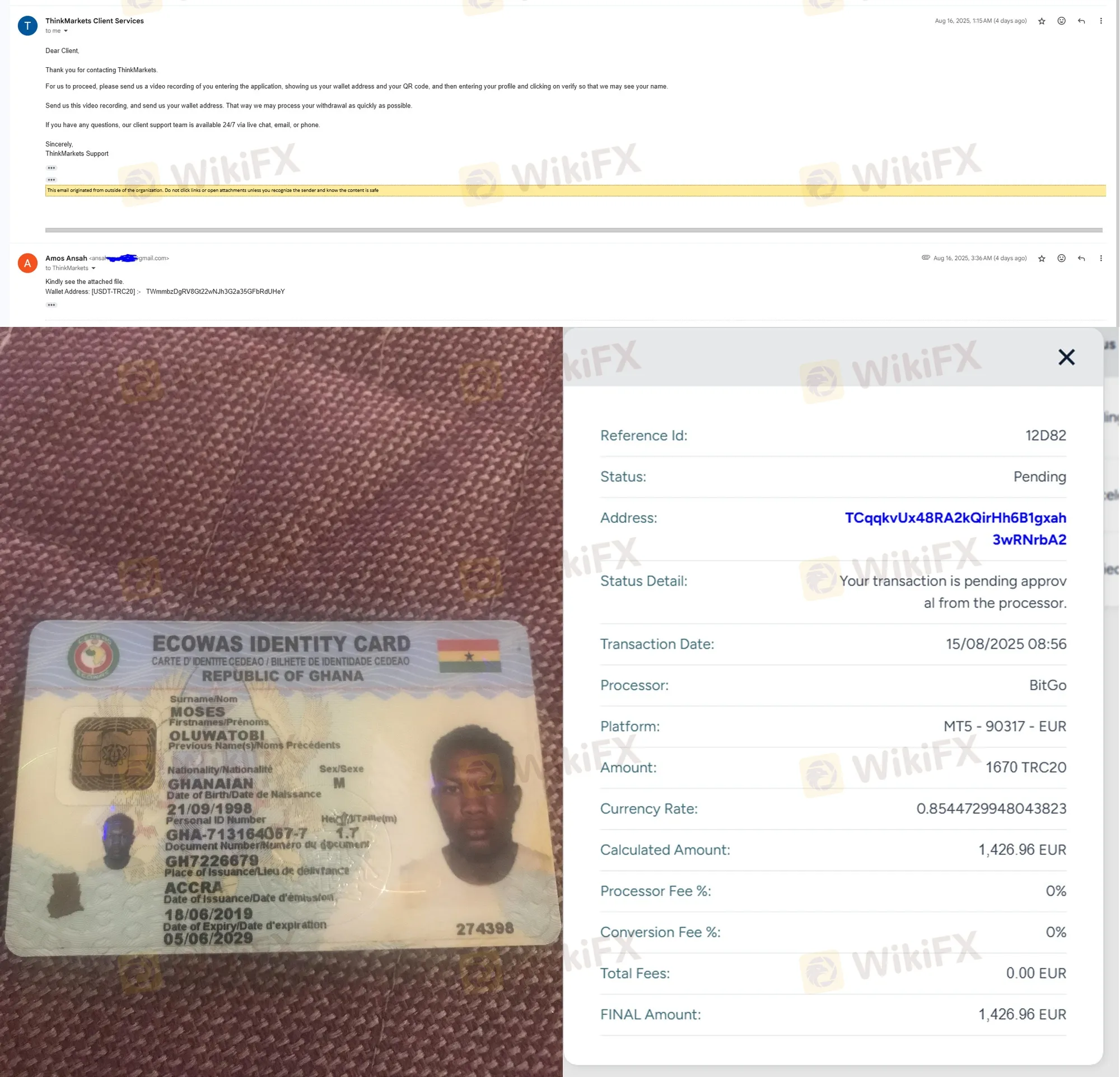
- Alleged Profit Cancellations: Several exposure cases feature allegations that the broker closed user accounts and wiped out profits after claiming the trader violated terms, leaving them unable to recover even their initial deposits.
- Platform Slippage: Some traders provided screenshots alleging severe slippage and system lag that prevented them from closing trades, resulting in heavy drawdowns.
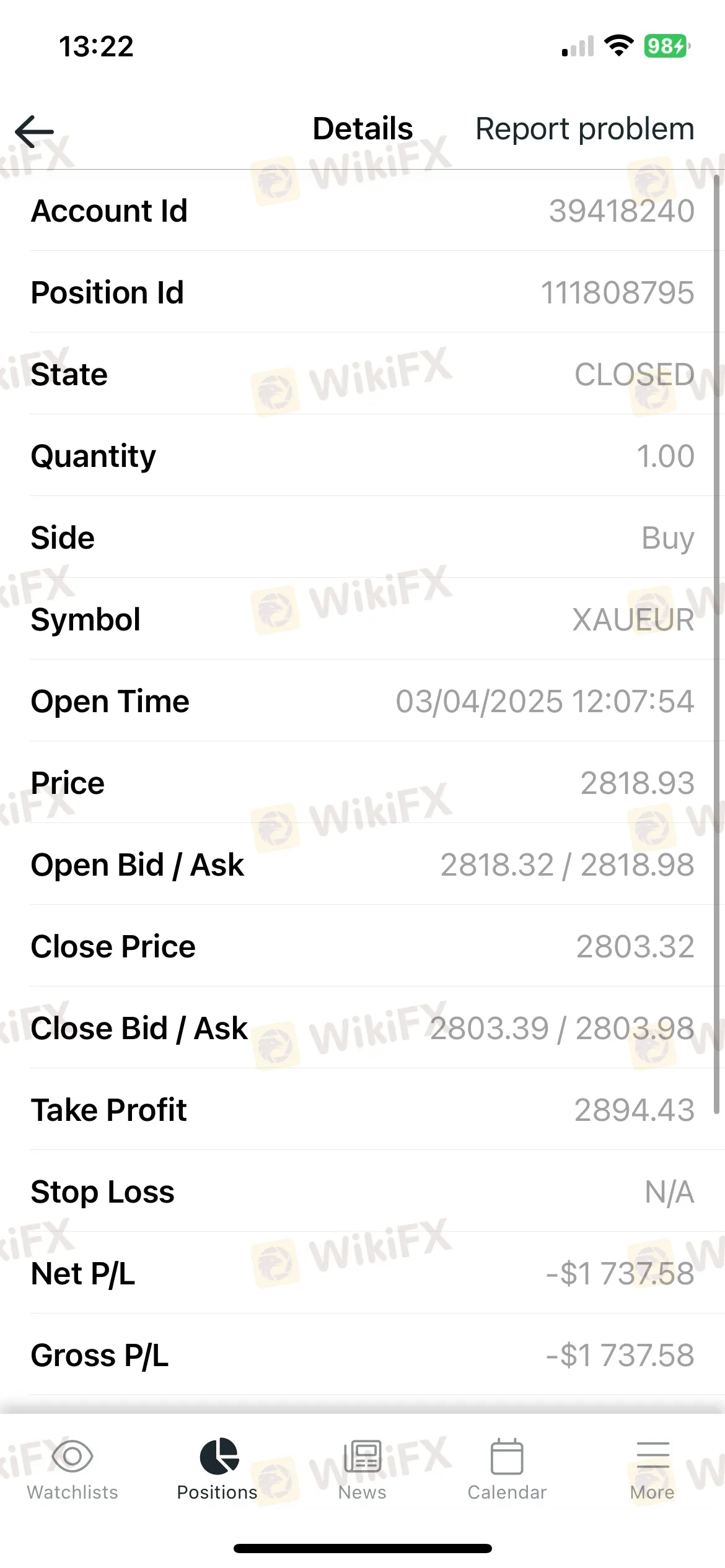
While some of these could be isolated technical issues or standard compliance checks, the sheer volume of identical complaints regarding ignored emails and frozen withdrawals is a significant risk indicator.
Deposits, Withdrawals, and Support
The broker supports standard payment channels like wire transfers, Skrill, Neteller, and UnionPay. While the customer service explicitly supports multiple languages, the broker's own profile notes that wait times may be long.
Given the user exposure cases, Indian traders should be extremely careful. If you decide to test this broker, it is highly advisable to test the withdrawal process with a small amount before committing larger capital, and to keep detailed records of all deposits.
Final Verdict: Should Indian Traders Trust ThinkMarkets?
The available data on ThinkMarkets presents a sharply divided picture. On one hand, its top-tier regulatory licenses (FCA, ASIC, CySEC) show a highly established global broker. On the other hand, the massive surge in complaints regarding frozen withdrawals and poor customer support cannot be ignored.
For Indian traders, the risk level currently appears moderate to high due to the recent withdrawal issues. Even the best regulation is unhelpful if you cannot access your funds locally when you need them.
Status changes daily. Before depositing, check the WikiFX App for the latest real-time certificate and broker risk updates.
Disclaimer:
The views in this article only represent the author's personal views, and do not constitute investment advice on this platform. This platform does not guarantee the accuracy, completeness and timeliness of the information in the article, and will not be liable for any loss caused by the use of or reliance on the information in the article.
WikiFX Broker
Latest News
UK Chancellor Healey: Economy demonstrates welcome resilience despite global uncertainty
WikiFXCMC Markets Extends US Share Trading Into Overnight Session
WikiFXWTI Oil nears $100 as Middle East tensions keep supply concerns elevated
WikiFXCanadian Dollar firms as US Dollar loses momentum, Oil prices extend rally
WikiFXProp Firm FTMO to Acquire OANDA with $422 Million
WikiFXUnited States Dollar Index holds onto gains above 99 ahead of US CPI data
WikiFXGold holds steady above $4,400 as traders await US inflation data
WikiFXNew Zealand Dollar edges higher to near 0.5850 ahead of US PPI inflation data
WikiFXSilver Forecast: XAG/USD rebound capped as bearish bias holds
WikiFXUSDJPY: 86% of Retail Traders Are Long
WikiFX