

Global Broker Regulation Inquiry App
About WikiFX
English
简体中文
繁體中文
English
Pусский
日本語
ภาษาไทย
Tiếng Việt
Bahasa Indonesia
Español
हिन्दी
Filippiiniläinen
Français
Deutsch
Português
Türkçe
한국어
العربية
اردو


Opofinance Trading Account Comparison and Fees Explained

WikiFX
|


Abstract:Compare Opofinance trading accounts and fees. Explore ECN, Standard, Copy, and Prop accounts with spreads, commissions, and trading conditions clearly outlined.
 Contents
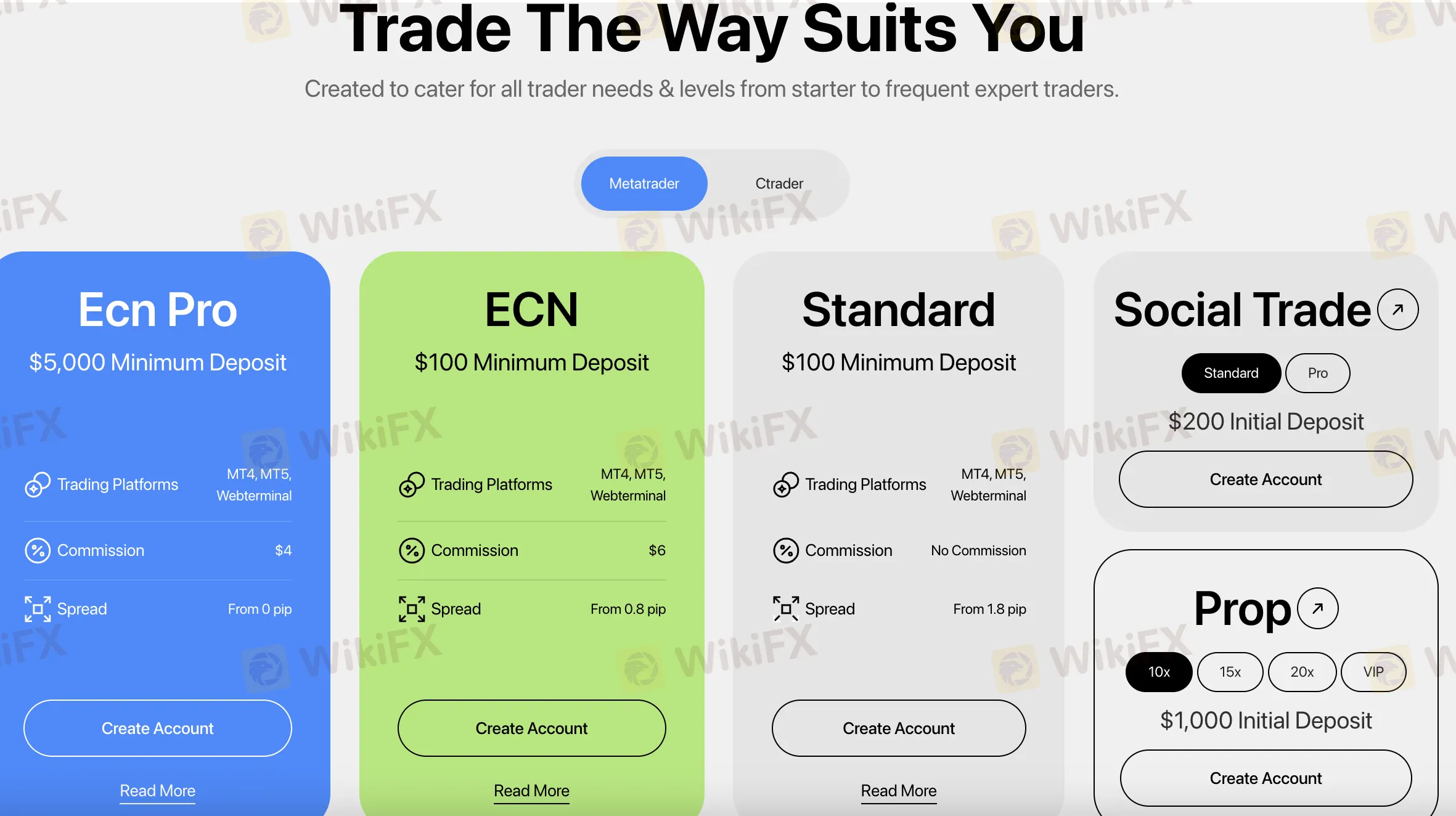
Opofinance Account Types: Tailored for Every Trader
Opofinance offers a diverse selection of account types to serve different trader profiles — from beginners to professionals and prop traders. Here's a breakdown:
🔹 Standard Account
- Minimum Deposit: $100
- Spreads: From 1.5 pips
- Commission: None
- Leverage: Up to 1:2000
- Best For: Beginners looking for a commission-free account
🔹 ECN Account
- Minimum Deposit: $500
- Spreads: From 0.0 pips
- Commission: $6 per lot round turn
- Leverage: Up to 1:2000
- Best For: Traders seeking tight spreads and fast execution
🔹 ECN Pro Account
- Minimum Deposit: $5,000
- Spreads: From 0.0 pips
- Commission: $4 per lot round turn
- Leverage: Up to 1:2000
- Best For: High-volume and institutional traders
🔹 Copy Trading Account
- Platform: MT4, MT5, cTrader, OpoTrade
- Purpose: For users who want to follow and copy top-performing traders
- Profit Sharing: Customizable; strategy providers may set commission rates
🔹 Prop Account (via FORFX Partnership)
- Evaluation Needed: Yes (one-stage challenge)
- Payout: Up to 90% profit share
- Leverage: 1:30
- Scaling Up: Up to $300,000 under management
- Drawdown Limit: 8% max
- Platform: MT5
- Best For: Traders with strong discipline seeking funded capital
Trading Fees & Spreads Breakdown
Fees vary based on account type and asset class. Heres what traders can expect:
| Account Type | Spread (EUR/USD) | Commission | Swap-Free Option | Min Deposit |
| Standard | From 1.5 pips | No | Yes | $100 |
| ECN | From 0.0 pips | $6/lot round turn | Yes | $500 |
| ECN Pro | From 0.0 pips | $4/lot round turn | Yes | $5,000 |
| Copy Trading | Depends on master trader | Revenue share | Yes | Variable |
| Prop Account | No spreads (eval) | None on funded | No | $55+ eval fee |
Additional Notes:
- No deposit or withdrawal fees imposed by Opofinance
- Swaps apply unless swap-free is selected (Islamic option)
- Commission is only charged on ECN accounts
Evaluation Accounts: Get Funded to Trade
Opofinance's Prop Trading program (via FORFX) offers a chance to trade real capital after passing a single evaluation stage. Key features:
- Evaluation starts from $55 with targets and limits clearly defined
- Earn real payouts during evaluation — not just after
- Receive up to 90% of profits on funded account
- No ongoing fees after evaluation success
- Ideal for experienced traders looking for scaling capital without risking their own funds
FAQs About Opofinance Trading Accounts & Fees
Q1: What is the minimum deposit for Opofinance accounts?
A: It starts at $100 for a Standard account, $500 for ECN, and $5,000 for ECN Pro.
Q2: Are there any commission charges?
A: Yes, ECN accounts charge $6 per lot (round turn), and ECN Pro charges $4. Standard accounts are commission-free.
Q3: Can I open an Islamic (swap-free) account?
A: Yes, swap-free options are available upon request for Standard and ECN accounts.
Q4: Does Opofinance support copy trading?
A: Absolutely. Traders can follow signal providers and pay performance-based commission under the Copy Account type.
Q5: What is the FORFX Prop Account and how does it work?
A: Its a funding model where you pass a challenge, trade a funded account, and receive up to 90% profit split — even during the evaluation.
Q6: Are there hidden fees or charges?
A: No. There are no hidden fees. All costs (spread, commission, swaps) are transparently published.
Disclaimer:
The views in this article only represent the author's personal views, and do not constitute investment advice on this platform. This platform does not guarantee the accuracy, completeness and timeliness of the information in the article, and will not be liable for any loss caused by the use of or reliance on the information in the article.
WikiFX Broker
Latest News
U.S. Rates and Tariffs Shape Macro Risk Sentiment
WikiFXTrendo Review: Is Your Deposit Safe?
WikiFXRinggit jumps 225 pips as US data cools Fed hike bets
WikiFXRand firms as traders await key inflation read
WikiFXInteractive Brokers changes overnight order default in TWS
WikiFXLQH Markets Review: Unregulated Broker With Growing Withdrawal Complaints
WikiFXReview 2026: STMARKET Regulation, MT5 Access, and Withdrawal Complaint Signals
WikiFXVonway Review: Withdrawal Complaints and a Regulator Warning
WikiFXASIC Pulled 19,400 Scams as AI Deepfakes Target Investors
WikiFXKATOPRIME Review: Unregulated and Risky, With Withdrawal Complaints to Verify
WikiFX