
Brokers Raise Margins Amid Gold and Oil Volatility in MENA Markets
Gold and oil markets surged amid rising Middle East tensions, prompting brokers across the MENA region to adjust margin requirements and trading conditions.
简体中文
繁體中文
English
Pусский
日本語
ภาษาไทย
Tiếng Việt
Bahasa Indonesia
Español
हिन्दी
Filippiiniläinen
Français
Deutsch
Português
Türkçe
한국어
العربية
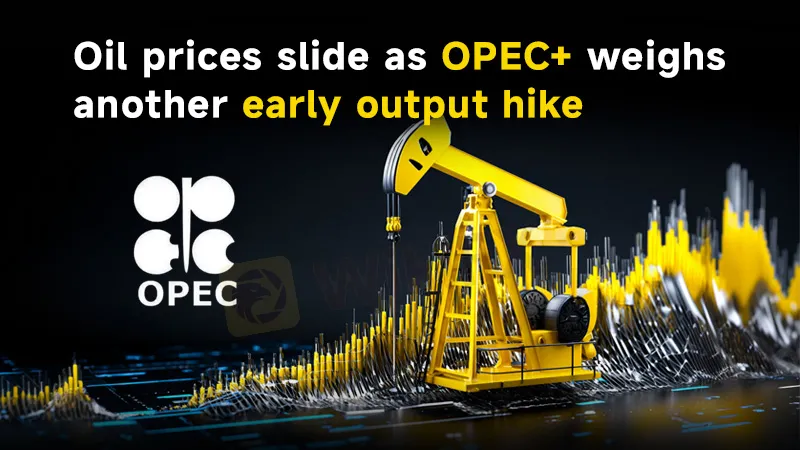
Abstract: Oil prices fell sharply this week as traders worried that OPEC+ might decide to pump more oil into the market at its upcoming meeting.

Oil prices fell sharply this week as traders worried that OPEC+ might decide to pump more oil into the market at its upcoming meeting.
Brent crude dropped $1.60, or 2.3%, to $67.54 a barrel by Wednesday afternoon, while U.S. West Texas Intermediate (WTI) slipped $1.68, or 2.6%, to $63.91. The decline came after reports that several OPEC+ members are considering increasing output sooner than expected.
Why Prices Are Falling
OPEC+, a group of oil-producing countries led by Saudi Arabia and Russia, will meet on Sunday to discuss production. According to Reuters, eight members may push to raise supply to regain market share.
This idea caught traders by surprise, as many expected the group to keep output steady. Even if new quotas are announced, the actual increase might be smaller since some members often struggle to meet production targets.
Other Factors Adding Pressure
Its not just OPEC+ affecting oil prices. In the U.S., crude stockpiles rose by 622,000 barrels in late August, according to industry data. This unexpected build signaled weaker demand and put further pressure on prices.
On top of that, U.S. economic data pointed to slowing activity:
Weaker economic growth typically means lower fuel demand, making oil less attractive to investors.
Whats Next
Energy stocks also fell as markets reacted to the possibility of more supply. Analysts say the outlook depends on whether OPEC+ actually follows through with production increases.
For now, traders are watching closely to see what OPEC+ decides this weekend.

Disclaimer:
The views in this article only represent the author's personal views, and do not constitute investment advice on this platform. This platform does not guarantee the accuracy, completeness and timeliness of the information in the article, and will not be liable for any loss caused by the use of or reliance on the information in the article.

Gold and oil markets surged amid rising Middle East tensions, prompting brokers across the MENA region to adjust margin requirements and trading conditions.

Oil prices fell as OPEC+ paused supply hikes for early 2026, fueling oversupply concerns. A stronger U.S. dollar added to pressure on WTI crude.

Finally, the day (August 27, 2025) arrived that India did not want. The imposition of 50% tariff by the US administration on most products exported from India. As per the US, the tariff is largely due to India continuing to purchase Russian oil. The extra 25% duty was added over 25% imposed at the beginning of August 2025 as India refused to stop purchasing Russian crude and defence hardware. Check out the sectors that will be hit the hardest with this tariff increase.

Crude Oil (WTI) - Rebound in the offing?